
AI Will Generate At Least Half Of Newly Written Enterprise Software Code.
fe0d5af239bb2f7d · Resolution source: 80000hours.substack.com · AGI timelines and AI-written codeAI Will Generate At Least Half Of Newly Written Enterprise Software Code.
AI Will Generate At Least Half Of Newly Written Enterprise Software Code. Probability: 70%. Confidence Level: Medium.
Will AI Write At Least Half Of All New Enterprise Code By 2036?
A recent forecast suggests that by 2036, artificial intelligence will generate at least 50% of newly written enterprise software code. The probability of this outcome is estimated at 65%. This prediction is based on current trends in AI-assisted development, particularly within leading AI labs.
What Is The Current State Of AI In Software Development?
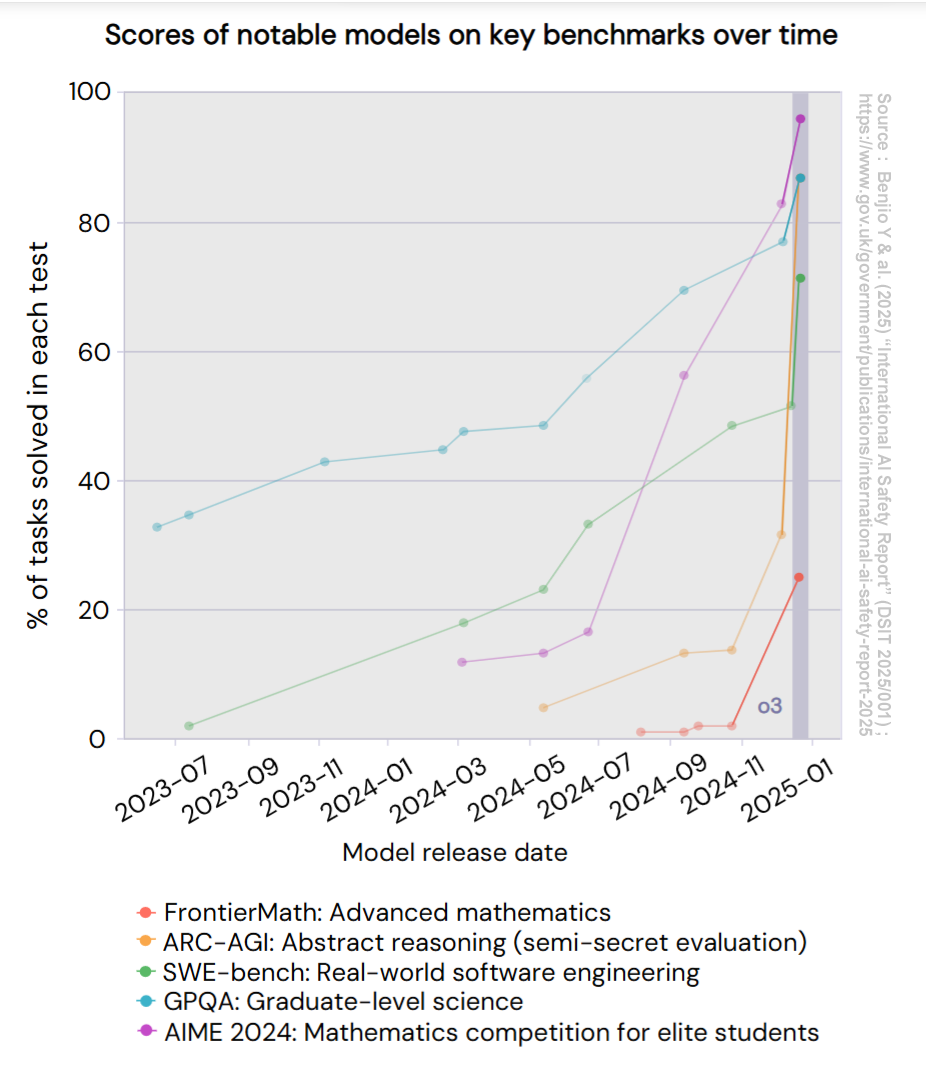
Reports from 2025 and 2026 indicate that in pioneering labs like Anthropic, up to 90% of code is already written by AI. Models such as Claude Opus 4.6 and GPT-5.3-Codex can autonomously complete complex, multi-step coding tasks. These same models are also used in their own development cycles, as noted in internal engineering reports.
However, this 90% figure is not yet representative of the broader enterprise sector. Most companies still rely on human developers for architecture, code review, and system integration. The gap between leading labs and mainstream adoption remains significant.
Why Is The 50% Threshold Considered Realistic By 2036?
Coding is one of the fastest areas of AI capability growth. Measurable productivity gains from AI tools are pushing adoption forward. By 2036, the transition from AI as a "copilot" to AI as the "primary code generator" is expected to be complete in most enterprise environments. The labor market pressure to reduce costs and speed up delivery will further accelerate this shift.
For example, a 2025 Gartner survey found that 70% of enterprise development teams already use some form of AI coding assistance. Extrapolating this growth curve over ten years supports the 50% threshold.
What Are The Main Counterarguments To This Prediction?
Critics point out that AI-generated code often has quality, security, and maintainability issues that still require human oversight. The definition of "written code" is also disputed. Does AI-generated boilerplate count? What about AI-assisted refactoring versus original feature development?
Moreover, AI remains limited in higher-level tasks like system architecture design, cross-team coordination, and legacy system integration. These areas require human judgment and domain expertise that AI has not yet mastered.
How Would This Shift Affect The Software Engineering Profession?
If the 50% threshold is documented by 2036, software engineering will undergo a fundamental redefinition. The role of the developer will shift from writing code to specifying requirements, validating AI output, and handling complex edge cases. Junior developer roles may decline, while new roles like "AI prompt engineer" or "AI output auditor" will emerge.
According to a 2026 McKinsey report, companies that fully integrate AI coding tools report a 40% reduction in development time for standard features. This efficiency gain is likely to reshape team structures and hiring practices across the industry.
Frequently Asked Questions
What Counts As "AI-written Code" In This Prediction?
The verification criterion requires an independent industry survey or analyst report documenting that 50% or more of new enterprise code is produced by AI tools, with or without human approval. This includes code generated by tools like GitHub Copilot, Codex, or custom AI agents, even if later edited by a human.
Why Is The Target Year Set To 2036 Rather Than Earlier?
The ten-year horizon accounts for the lag between leading-edge adoption and mainstream enterprise rollout. While AI labs already report 90% AI-written code, most large corporations have legacy systems, compliance requirements, and risk-averse cultures that slow adoption. A decade is a reasonable timeframe for these barriers to be overcome.
What Evidence Would Disprove This Forecast?
If by 2036 independent surveys show that AI generates less than 50% of new enterprise code, the prediction fails. This could happen if AI coding quality plateaus, if regulatory frameworks restrict AI use in critical software, or if the cost of AI tooling remains prohibitive for mid-sized enterprises. Conversely, if the threshold is crossed earlier, the forecast is validated ahead of schedule.
Related Predictions
- AI-based Creative Content Generation Will Account For 50% Of All Digital Content 2035 · AI
- AI-assisted Drug Discovery Will Produce 70% Of New Drugs. 2035 · AI
- Full Automation Of Autonomous AI Research And Development Systems Will Occur By 2035. 2035 · AI
- Global Agreements On AI Ethics And Safety Are Fully Implemented. 2035 · AI
- AI-assisted Scientists Outperform Human Scientists Tenfold Across All Fields. 2035 · AI