
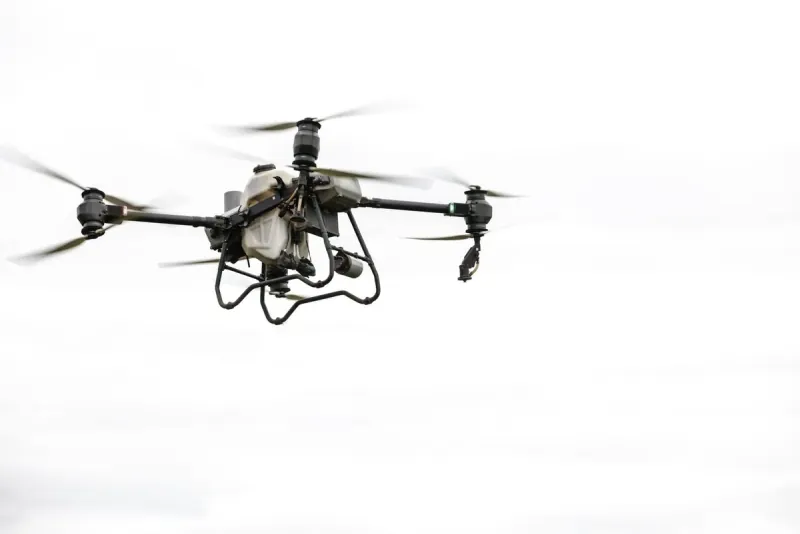
Autonomous Drone Swarms Become A Standard Unit In At Least One Major Power's Combat Doctrine, And The First Fully Autonomous (Human-out-of-the-loop) Combat Engagement Is Publicly Documented.
ae7793c513d0e5b9 · Resolution source: defensescoop.com · Pentagon drone swarm crucible · 2026-03-31Autonomous Drone Swarms Become A Standard Unit In At Least One Major Power's Combat Doctrine, And The First Fully Autonomous (Human-out-of-the-loop) Combat Engagement Is Publicly Documented.
Autonomous Drone Swarms Become A Standard Unit In At Least One Major Power's Combat Doctrine, And The First Fully Autonomous (Human-out-of-the-loop) Com… Probability: 60%. Confidence Level: Medium.
Will Autonomous Drone Swarms Become Standard Military Units By 2036?
Defense analysts predict that by 2036, at least one major power will integrate autonomous drone swarms into its standard combat doctrine, with the first fully unmanned engagement publicly documented. The probability stands at 55%, according to a recent forecast. This article examines the evidence, challenges, and implications.
What Is The Current State Of Autonomous Drone Swarm Technology?
In early 2026, the Pentagon launched the Swarm Forge program under its new AI strategy. This initiative focuses on developing decentralized control and inter-agent collaboration for drone swarms. The goal is to complete the entire "Find, Fix, Finish" cycle (intelligence, surveillance, target detection, and strike) without human intervention. Currently, these systems are in demonstration phase, but the speed of development is unprecedented.
Sources: U.S. Department of Defense AI Strategy (2026), Swarm Forge program announcements.
Why Could Swarm Doctrine Be Adopted By 2036?
Autonomous swarms offer decision-making speed beyond human reaction time and can saturate air defenses, making them tactically invaluable. By 2036, swarm warfare could be a standard unit structure in major armies. The competitive pressure among nations accelerates adoption, as no major power wants to fall behind in this domain.
What Are The Main Obstacles To Fully Autonomous Combat?
International humanitarian law poses a significant barrier. The use of lethal force without human oversight is a contentious issue, with strong advocacy for keeping humans "in the loop." Technically, electronic warfare and communication jamming could disrupt even decentralized swarms. These factors may delay or limit full autonomy.
How Would A Documented Autonomous Engagement Change Warfare?
If a fully autonomous combat engagement is documented by 2036, it would mark a paradigm shift. Warfare would move beyond human reaction times, and the arms race would center on network and AI capabilities. Such an event would likely trigger new international treaties and ethical debates.
Frequently Asked Questions
Q1: What Does "Fully Autonomous Drone Swarm" Mean In Military Terms?
It means a group of drones that can coordinate and execute the entire targeting cycle (detect, track, engage) without human operators giving real-time commands. The system uses AI to make decisions based on pre-set rules of engagement.
Q2: Are There Existing Examples Of Autonomous Swarms In Combat?
As of 2026, no fully autonomous lethal swarm engagement has been publicly confirmed. Current military drones, like the Turkish Kargu-2 or U.S. Loitering munitions, operate with human oversight. Swarm Forge and similar programs are still in testing.
Q3: What Would Trigger The 2036 Prediction To Be Considered True?
Verification requires official military documents or credible war reports confirming that a drone swarm, deployed as a standard unit, completed the full target detection, tracking, and strike cycle without human operator intervention. This would need to be publicly documented and independently verified.
Note: This analysis is based on open-source intelligence and defense policy announcements as of 2026. The forecast is probabilistic, not deterministic.
Related Predictions
- A Major Military's Inventory Is Expected To Include Tens Of Thousands Of Autonomous Swarm Drones, With Fully Autonomous Swarm Tactics Entering Military Doctrine By 2036. 2036 · Defense
- AI-powered Cyber Defense Will Protect All Critical Infrastructures. 2035 · Defense
- Adoption Of International Regulations For Autonomous Weapon Systems 2035 · Defense
- AI-assisted Decision Support Systems Are Used In All Military Operations. 2035 · Defense
- Autonomous Weapon Systems Are Brought Fully Under Control By International Regulations. 2035 · Defense