
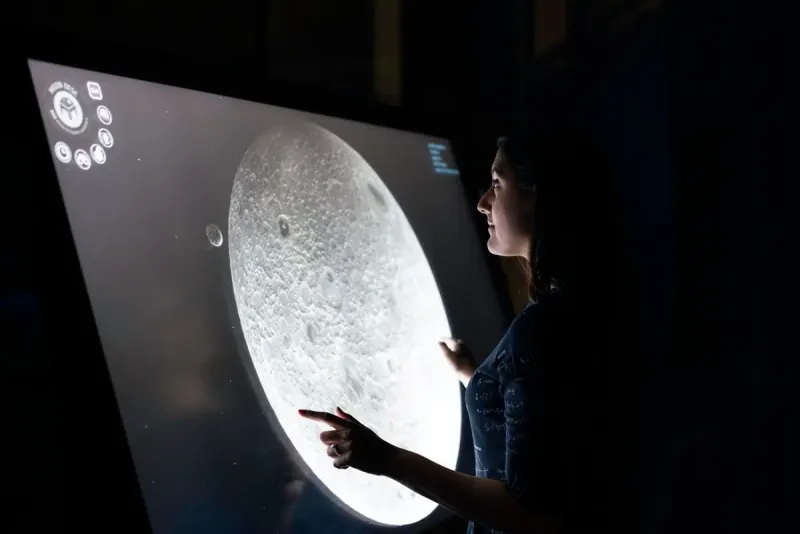
First Commercial Extraction Of Water Ice From The Moon
ea3626154cff9a34 · Resolution source: bbc.com · NASA Found Water on the MoonFirst Commercial Extraction Of Water Ice From The Moon
First Commercial Extraction Of Water Ice From The Moon Probability: 50%. Confidence Level: Medium.
Will The Extraction Of Water Ice From The Moon Take Place In 2036?
When talking about space mining, the first concrete target is water ice found in the south pole of the moon. This resource is critical for producing rocket fuel (hydrogen and oxygen) and drinking water. So, what is the likelihood that this transformative step will become a commercial reality by 2036?
The Existence and Current Status of Water Ice
The existence of water ice on the Moon is now a scientific fact. Data from NASA and other space agencies, particularly spectrometric data from permanently shadowed polar craters, has confirmed the presence of high concentrations of ice. However, as of today, no private company has yet established an extraction facility on the lunar surface. NASA’s Artemis program aims to land astronauts at the moon's south pole by the late 2020s. These missions will provide critical data for In-Situ Resource Utilization (ISRU) - using resources found on site. Intuitive Machines and Astrobotic, like other commercial landing vehicle companies, are currently conducting mapping surveys of resources. However, there isn’t yet a confirmed commercial extraction mission.
The 2036 Target: Technical and Economic Viability
As indicated in the estimation rationale, the mid-2030s presents a technically viable window. The infrastructure provided by the Artemis program - continuous energy sources (solar panels or micro nuclear reactors) and robotic excavation systems - could make extracting water ice possible. Furthermore, the growth of the commercial space economy is increasing demand for fuel replenishment stations in Earth orbit. This would create a potential market for hydrogen and oxygen extracted from the moon (rocket fuel). However, high infrastructure costs and the fact that the market hasn’t yet matured limit this estimate to a moderate probability.
Challenges and Risks Encountered
The challenging environmental conditions on the Moon - extreme temperature differences and energy storage problems in permanently shadowed craters - are major obstacles. Additionally, the drilling and heating equipment needed to extract water ice must be developed to operate autonomously in space. For a commercially viable product to emerge, a logistical network needs to be established for purifying the extracted water, storing it, and transporting it to potential customers (such as fuel stations in orbit). Each link in this chain represents a significant hurdle - both technically and financially.
Impacts if Successful
If this prediction comes true, the Moon will become the first celestial body to free itself from dependence on Earth. The cost of refueling spacecraft in space would decrease, providing a launchpad for manned missions to Mars. Furthermore, the commercial value of water ice will also bring about disputes regarding space law and resource utilization. This could be the most critical economic driver ensuring humanity’s sustainable presence in space.
Frequently Asked Questions
How Is Water Ice Extracted From The Moon?
The most common method involves heating the ice found in permanently shadowed craters using heat, vaporizing it, and then cooling it to convert it back into liquid water. Drilling and heating systems are placed beneath the surface for this purpose. The resulting water can be separated into hydrogen and oxygen via electrolysis, which can then be used as rocket fuel.
Which Companies Could Be Pioneers In Commercial Extraction?
Companies working under NASA’s Commercial Lunar Payload Services (CLPS) program, such as Intuitive Machines and Astrobotic, are pioneering in exploration and logistics. SpaceX's Starship vehicle could also serve as the main carrier for large-scale cargo transport operations. Companies developing private nuclear reactors, like Zeno Power, will play a critical role in providing energy infrastructure.
Will This Initiative Solve Earth’s Water Crisis?
No, transporting the water extracted from the Moon back to Earth would not be economically viable. The primary purpose of this undertaking is to produce fuel for spacecraft and sustain life support systems on space stations. This would reduce launch costs from Earth, opening up access to deep-space exploration.
Related Predictions
- Space Tourism Reaching More Than 10,000 Customers Per Year 2036 · Space
- Commercial Operations Of Orbital Debris Removal Systems Will Commence. 2035 · Space
- The First Commercially Produced Product In Space (Fiber Optics, Pharmaceuticals) Is Sold To Earth 2035 · Space
- Asteroid Discovery Probes Will Map More Than 10,000 Asteroids. 2035 · Space
- The First Commercially Produced Product In Space Is Sold On Earth 2035 · Space