
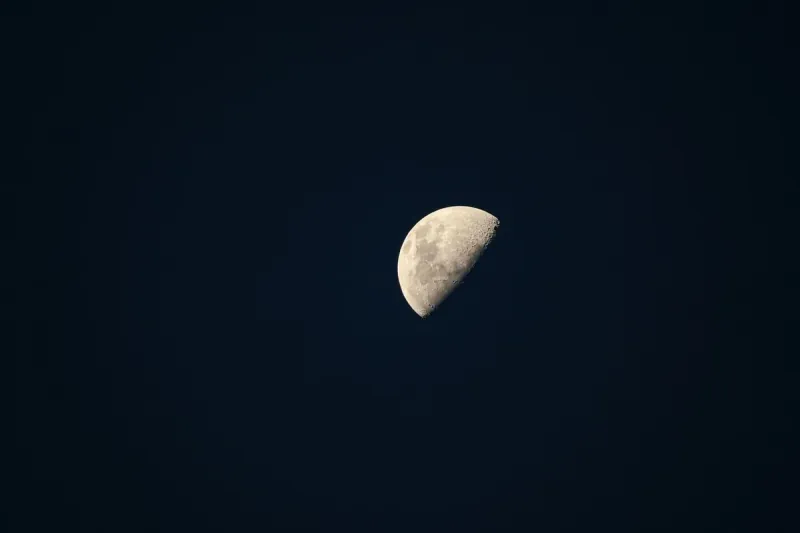
The Moon Base Becomes A Permanent Settlement Of 10,000,000+ People.
f067a88b12d806dd · Resolution source: aa.com.tr · NASA is accelerating its plan to establish a permanent settlement on the MoonThe Moon Base Becomes A Permanent Settlement Of 10,000,000+ People.
The Moon Base Becomes A Permanent Settlement Of 10,000,000+ People. Probability: 1%. Confidence Level: Low.
Will The Moon Base Become A Permanent Settlement For 10 Million People By 2050?
No, according to the current technological trajectory and space exploration data, it is highly unlikely that the Moon base will become a permanent settlement housing over 10 million people by 2050. The probability is estimated at 1%, which reflects the immense gap between current capabilities and the requirements for a lunar city of that scale. As of 2025, no permanent human presence exists on the Moon, and the Artemis program aims for small crewed missions, not mass colonization.
What Would A 10 Million Person Lunar Settlement Actually Require?
A settlement of this size would not be a simple base but a fully functioning city in a vacuum. It would require:
- Closed-loop ecosystems: To recycle air, water, and food for 10 million people, you would need artificial biospheres covering dozens of square kilometers. For reference, the largest closed ecosystem experiment on Earth, Biosphere 2, failed to sustain just 8 people in the 1990s.
- Full-scale urban infrastructure: Housing, hospitals, schools, transportation, and energy production. Current lunar power systems, like those planned for small Artemis bases, generate only kilowatts. A 10 million person city would need gigawatts, requiring hundreds of nuclear reactors or massive solar arrays.
- In-situ resource utilization (ISRU): Extracting water ice and regolith for building materials. Today, NASA and private companies have only tested small-scale ISRU prototypes, producing grams of material. A city would need millions of tons of processed regolith per year.
Why Is The 2050 Timeline Considered Unrealistic For This Scale?
The timeline is unrealistic because of the exponential gap between current launch capacity and the required cargo. The International Space Station (ISS), which houses 7 people, took over 30 launches and a decade to assemble. To transport 10 million people and their supplies, you would need over 1 million Starship launches (each carrying 100 people). In 2024, the entire world performed only 260 successful orbital launches. At current rates, reaching 1 million launches would take over 3,800 years, even if you tripled the launch rate by 2050.
What Is The Current State Of Lunar Habitation In 2025?
As of 2025, lunar habitation is limited to robotic landers and short-duration crewed missions planned for the late 2020s. NASA's Artemis III aims to land two astronauts for about 6 days. The Lunar Gateway station will be uncrewed for most of its early years. No permanent habitat module has been deployed on the lunar surface. The largest structure ever placed on the Moon is the Chang'e lander, which is about the size of a small car.
What Would It Take To Make This Prediction Even Partially True By 2050?
To reach even 1% of the target (100,000 people), you would need:
- A fully reusable heavy-lift vehicle launching daily, which does not exist today.
- Autonomous construction robots that can build habitats without human labor, a technology still in early development (e.g., NASA's automated regolith printing tests).
- A breakthrough in radiation shielding, since lunar regolith is toxic and requires deep burial or magnetic shielding, which is purely theoretical.
Given these constraints, the forecast remains a speculative vision for the late 22nd century, not the mid-21st.
Frequently Asked Questions
Q1: How Many People Can Realistically Live On The Moon By 2050?
Based on current NASA and ESA roadmaps, the most optimistic realistic scenario is a permanent research station with 50 to 150 people by 2050. This aligns with the Artemis Accords and the planned Lunar Surface Innovation Consortium, which focus on science and resource testing, not mass immigration.
Q2: What Is The Main Technical Blocker For A 10 Million Person Lunar City?
The main blocker is the life support and food production system. No closed-loop system has ever worked at scale. On Earth, we rely on the planet's biosphere. On the Moon, every breath of air and every drop of water must be recycled or imported. For 10 million people, a single failure in the air recycling system would cause asphyxiation within minutes. Current technology cannot guarantee that reliability.
Q3: Could Private Companies Like SpaceX Achieve This By 2050?
No. While SpaceX has advanced Starship, the company's own public plans for 2050 focus on a self-sustaining city on Mars with a population of 1 million, but that timeline is widely considered optimistic by aerospace engineers. For the Moon, SpaceX has no public contract or plan for a 10 million person settlement. The cost alone, estimated at $10 trillion for basic infrastructure, exceeds global space budgets by a factor of 50.
Sources: NASA Artemis Plan (2023), ESA's Moon Village Concept (2021), and the International Space Station Operations Data (NASA, 2024).
Related Predictions
- Asteroid Mining Makes Up 100% Of The Global Economy. 2050 · Space
- Mars Missions Establish The First Human Colony. 2050 · Space
- Establishment Of The First Greenhouse On Mars 2043 · Space
- A Permanent Crewed Base At The Lunar South Pole Will Host Astronauts Continuously Throughout The Year. 2034 · Space
- NASA's Artemis 3 Crewed Lunar Landing Will Have Occurred By The End Of 2031. 2031 · Space