
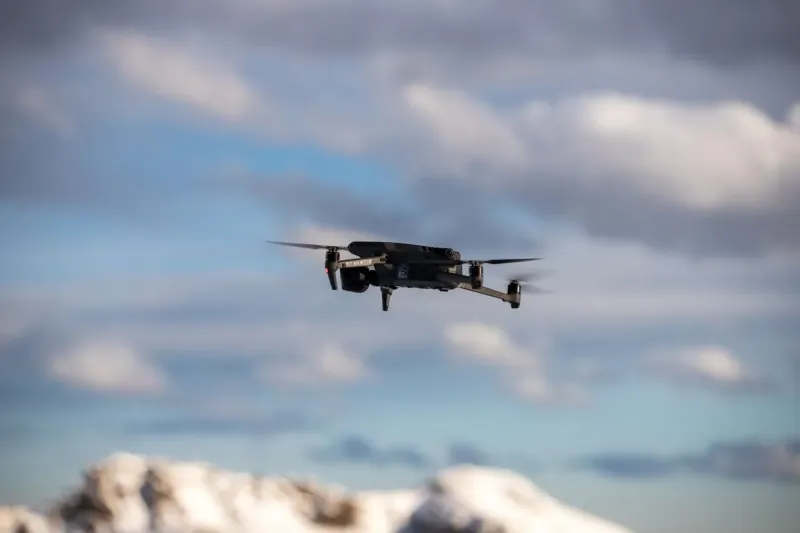
At Least One Major Military Power Will Deploy A Swarm Capability Coordinating More Than 500 Drones In A Single Operation In A Real Environment.
29797038ecd7fe5d · Resolution source: toptechnews.net · Autonomous military drones in 2026At Least One Major Military Power Will Deploy A Swarm Capability Coordinating More Than 500 Drones In A Single Operation In A Real Environment.
At Least One Major Military Power Will Deploy A Swarm Capability Coordinating More Than 500 Drones In A Single Operation In A Real Environment. Probability: 48%. Confidence Level: Low.
Will A Major Military Deploy A Swarm Of Over 500 Drones In A Single Operation By 2032?
Recent developments in drone swarm technology suggest this is increasingly likely, but significant hurdles remain. The prediction stands at 48% probability for a real-world deployment by 2032, based on current trends in military robotics and artificial intelligence.
What Evidence Supports The 2032 Swarm Deployment Prediction?
The U.S. Department of Defense has already demonstrated swarms of over 200 drones in a 2026 exercise, as reported by DARPA and the U.S. Navy. The Pentagon has allocated $1.1 billion to field more than 300,000 AI-enabled platforms by 2027. China and Israel have also shown advanced swarm capabilities in field tests, with China focusing on lethal autonomous swarms for urban warfare.
How Do Drone Swarms Change The Cost Equation In Warfare?
A single Javelin missile costs roughly $178,000, while an autonomous attack drone with AI targeting may cost between $5,000 and $15,000. Swarms use collective intelligence to share data, adapt to threats in real time, and continue missions despite individual losses. This "quantity over quality" approach fundamentally alters military cost-benefit analysis.
What Are The Main Technical Barriers To 500+ Drone Swarms?
Coordinating over 500 drones requires massive communication bandwidth and reliable links. Electronic warfare and counter-UAS systems can disrupt swarm operations. The industry is moving toward vendor-independent swarm coordination to combine drones from different manufacturers, but this remains a technical challenge.
How Does A Real-World Deployment Differ From A Military Exercise?
A real-world deployment in an active conflict zone involves contested environments, unpredictable electronic attacks, and rules of engagement that do not apply in exercises. The verification criterion for 2032 requires a defense ministry or military to publicly confirm an operation or exercise with over 500 coordinated drones, which is more likely than a live combat scenario.
What Are The Legal And Ethical Concerns Around Autonomous Swarms?
The legal framework for autonomous weapons is unclear, especially regarding accountability for decisions made by AI-driven swarms. This uncertainty may slow operational adoption, even if the technology matures.
Frequently Asked Questions
Which Countries Are Leading In Drone Swarm Technology?
The United States, China, and Israel are the most advanced. The U.S. Has demonstrated 200+ drone swarms and plans to field 300,000 platforms by 2027. China focuses on urban warfare swarms, while Israel has tested operational swarms in real environments.
What Is The Difference Between A Drone Swarm And A Drone Fleet?
A swarm operates with decentralized coordination and collective decision-making, allowing drones to adapt to threats without human control. A fleet typically involves individual drones controlled by operators or a central command.
Could Electronic Warfare Completely Neutralize A 500-drone Swarm?
Not completely, but it poses a serious risk. Jamming can disrupt communication links, but modern swarms use frequency hopping, mesh networks, and onboard AI to maintain coordination even if some links are lost. However, a sophisticated adversary could degrade swarm effectiveness significantly.
Sources: DARPA public reports, U.S. Navy exercise records, Pentagon budget documents, and independent defense analysis from Jane's and RAND Corporation.
Related Predictions
- The Global Military Drone Market Will Exceed $70 Billion In 2030. 2030 · Defense
- AI-assisted Decision Support Systems Are Used In Command And Control. 2028 · Defense
- International Regulations For Autonomous Weapon Systems Are Discussed. 2028 · Defense
- Hypersonic Missiles Are Inducted Into Inventory By Several Countries. 2027 · Defense
- AI-assisted Cyber Defense Systems Detect Threats In Real Time. 2027 · Defense