
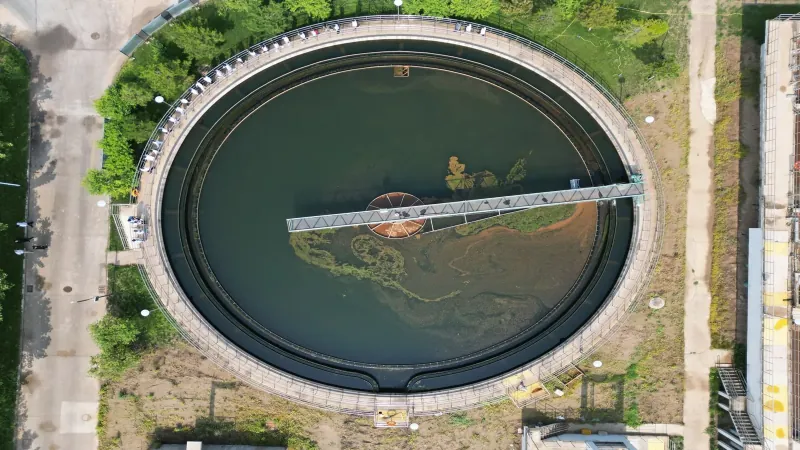
By 2041, The Share Of Non Reverse Osmosis Thermal Methods (MSF And MED) İn Total İnstalled Capacity İn The Seawater Desalination Systems Market Will Have İncreased By At Least 10 Percent Compared To The 2027 Level.
bb4653e749d7ab3a · Resolution source: maximizemarketresearch.com · Marine Desalination System Market : Forecast and AnalysisBy 2041, The Share Of Non Reverse Osmosis Thermal Methods (MSF And MED) İn Total İnstalled Capacity İn The Seawater Desalination Systems Market Will Have İncreased By At Least 10 Percent Compared To The 2027 Level.
By 2041, The Share Of Non Reverse Osmosis Thermal Methods (MSF And MED) İn Total İnstalled Capacity İn The Seawater Desalination Systems Market Will Hav… Probability: 54%. Confidence Level: Medium.
What is this development?
The share of thermal methods in the seawater desalination market is expected to rise by 2041. Heat based systems such as Multi Stage Flash Distillation (MSF) and Multi Effect Distillation (MED) are re emerging as a group outside reverse osmosis.
This development is linked to seawater being seen as a nearly inexhaustible resource. The seawater segment holds a dominant share of 56.74 percent in the desalination technologies market in 2026.
Why does it matter?
Thermal methods can operate more robustly under high salinity and high temperature conditions where membrane based systems struggle. For this reason they make up a significant part of installed capacity in regions such as the Gulf countries where seawater salinity is high.
As global water scarcity pressure grows, technology diversity rather than dependence on a single method becomes strategic. The rising share of MSF and MED plants serves as an indicator for countries planning energy and water security together.
Evidence and data
- Seawater accounts for about 57 percent of global desalination installed capacity, while brackish water ranks second at 23 percent (ResearchGate, 2011).
- The seawater segment holds a 56.74 percent share of the desalination technologies market in 2026 (Fortune Business Insights).
- The desalination technologies market was valued at 20 billion dollars in 2023, is forecast to reach 52 billion dollars by 2033, with a compound growth rate of 9.8 percent between 2024 and 2033 (Market.us).
- The Middle East and Africa region is expected to maintain its leadership in marine desalination systems throughout the forecast period (Maximize Market Research).
Timeline
- 2026: The seawater segment reaches a 56.74 percent share in the desalination technologies market.
- 2027: The installed capacity share of thermal methods is recorded as the reference value.
- 2033: The desalination technologies market reaches 52 billion dollars.
- 2041: The combined share of MSF and MED rises at least 10 points above the 2027 level.
Frequently asked questions
Why were thermal methods losing share to reverse osmosis?
Improvements in energy efficiency and falling costs of reverse osmosis membranes reduced the market share of thermal systems from the 2000s onward. However thermal systems remain advantageous under high salinity conditions.
Which region does this prediction rely on?
The Middle East and Africa region maintains its leadership in marine desalination systems. New investments in this region directly affect thermal capacity.
How will the prediction be verified?
In market reports published in 2041, the combined installed capacity share of the MSF and MED categories will be compared with the 2027 value. An increase of at least 10 points confirms the prediction.
Related Predictions
- By 2044, The Share Of Non Reverse Osmosis Methods (MSF, MED, ED And Nanofiltration) In Total Installed Desalination Capacity Will Have Increased By At Least 15 Percent Compared To 2027 Levels. 2044 · Ocean
- Artificial Reefs For Marine Life Will Be Produced Using 3D Printing. 2036 · Ocean
- By 2047, The Installed Capacity Of Seawater Desalination Systems Will Have At Least Doubled From 2027 Levels, Driven By Global Water Scarcity Pressure And Led By The Middle East And Africa Region. 2047 · Ocean
- By 2032, The Marine Desalination Systems Market Will Have At Least Doubled Compared To İts 2024 Level, Exceeding 1.93 Billion US Dollars. 2032 · Ocean
- Smart Irrigation Systems Will Reduce Agricultural Water Use By 40% 2032 · Ocean