
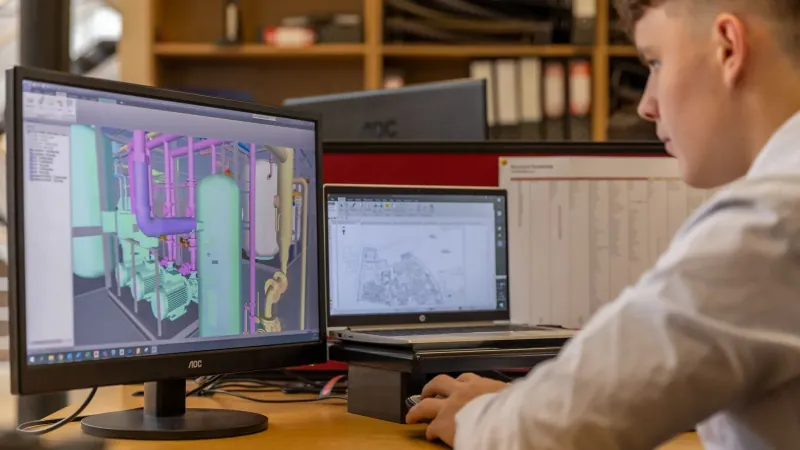
By 2037, Digital Twins Become Widespread For Individual Use.
30ef53a3e8e2d132 · Resolution source: doi.orgPrediction Details
By 2037, Digital Twins Become Widespread For Individual Use. Probability: 65%. Confidence Level: Medium.
Digital Twins: When Will They Become Mainstream For Individual Use?
The concept of digital twins has long been limited to simulating industrial facilities and urban infrastructure. However, over the next ten years, the focus of this technology will shift towards the individual. By 2037, commercial digital twin applications in areas such as personal health, home energy management, and financial planning are projected to reach at least one-fifth of the population - a bold but plausible target considering today’s landscape. What driving forces and obstacles lie behind this transformation?
Where Are Digital Twins Today?
Currently, digital twins are primarily used on an enterprise scale. Smart building management systems can virtually model and optimize a building's energy consumption. In the healthcare sector, digital models of specific organs like hearts or joint replacements are being tested in hospitals for surgical planning. However, these systems require expensive sensor networks and specialized data science teams. Commercial applications geared towards individual users - powered by single devices like smartwatches or home smart meters - are still in their early stages, offering primarily one-dimensional solutions such as health tracking or energy reporting.
Why Might Personal Digital Twins Become A Reality By 2037?
The most significant factor enabling this prediction is the declining cost of sensors and processors. Infrared sensors and high-resolution energy monitors that were expensive just ten years ago have now become standard hardware. Furthermore, the shrinking size of artificial intelligence models allows these models to run directly on devices, reducing the need to transmit data to the cloud. The convergence of the Internet of Things, artificial intelligence, and falling sensor costs will make personal digital twins affordable by the mid-2030s. For example, a digital twin modeling an entire home’s energy consumption could be updated in real-time with data from smart meters, offering users savings recommendations. Similarly, a health digital twin processing a person's metabolic and genetic data could generate personalized diet and exercise plans. In the financial sector, a digital twin simulating spending habits and investment portfolios could predict future cash flows, preventing budget errors.
What Challenges Are Delaying This Prediction?
The primary challenge is data privacy and user trust. Combining a person’s health data with their spending habits on a single platform raises serious cybersecurity risks. User acceptance would only be possible through transparent data policies and robust encryption methods when entrusting this data to third-party applications. Additionally, the maturity of the infrastructure is critical. The widespread adoption of 5G and edge computing infrastructure needs to evolve to support real-time data streams. Therefore, 2030 rather than 2037 appears as a more realistic target year considering both technological and social acceptance factors. Ultimately, mass adoption cannot be expected until security and infrastructure issues are resolved.
Frequently Asked Questions
In Which Areas Will Personal Digital Twin Applications First Become Widespread?
Personal digital twins will see the fastest adoption in health and energy management. In healthcare, chronic disease monitoring will be key, while in energy, smart home automation and savings systems will take precedence. Financial planning is likely to progress more slowly due to data sensitivity.
What Types Of Data Are Required For Individual Use Of Digital Twins?
Essentially, three data sources are needed: biometric sensors (smartwatches, EEG headsets), energy consumption meters, and financial transaction records. The combination of this data is critical for creating a real-time simulation.
Will Data Security Concerns Derail This Technology?
It’s certainly risky, but not insurmountable. Technologies like edge computing and homomorphic encryption allow data to be processed without leaving the device, protecting user privacy while enabling the benefits of digital twins. Maturation of these solutions is expected by 2037.
Related Predictions
- By 2037, Metaverse Meetings Will Replace 40% Of Physical Meetings. 2037 · Virtual
- By 2037, Holographic Display Technology Will Become Commercially Widespread. 2037 · Virtual
- By 2035, AR-based Navigation Becoming Standard On All Smartphones. 2035 · Virtual
- By 2035, AR/VR Will Become A Mandatory Tool In Education. 2035 · Virtual
- By 2041, XR Glasses Sales Will Surpass Headset Sales, And Optical See-through Glasses Will Account For More Than Half Of The Total XR Market. 2041 · Virtual