
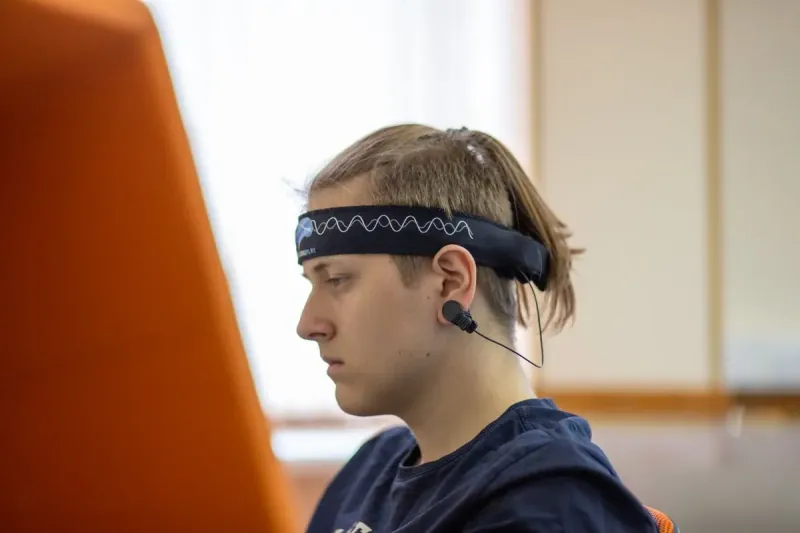
Home Use Of Transcranial Magnetic Stimulation Will Become Widespread.
a8c6dc90aeeb6263 · Resolution source: memorial.com.tr · What is TMS treatment?Home Use Of Transcranial Magnetic Stimulation Will Become Widespread.
Home Use Of Transcranial Magnetic Stimulation Will Become Widespread. Probability: 75%. Confidence Level: Medium.
Transcranial Magnetic Stimulation (TMS) - Can It Be Used At Home?
Transcranial magnetic stimulation (TMS) is a non-invasive brain stimulation technique used in the treatment of neuropsychiatric disorders such as depression and obsessive compulsive disorder. Traditional TMS requires several sessions per week under specialist supervision in a hospital setting. However, rapid advancements in neurotechnology may change this expensive and time-consuming treatment model. It is expected that home-based TMS devices will become widespread by 2033.
What Are The Limitations Of Current TMS Devices?
Current TMS devices are large, heavy, and energy-intensive machines. They require complex cooling systems and precise positioning mechanisms. FDA-approved protocols typically involve a concentrated treatment course of 20-30 sessions. This limits patients’ access to treatment and makes it only feasible in large healthcare centers due to the high cost. Integration with digital health platforms is still incomplete.
What Factors Are Supporting The Development Of Home-Based TMS?
Technological miniaturization is the strongest driving force behind this prediction. In recent years, lightweight and portable prototypes capable of generating low-intensity magnetic fields have been developed. These devices aim to provide effective stimulation using smaller coil arrays instead of fixed coils, utilizing less energy. An increasing number of randomized controlled trials are presenting preliminary findings suggesting that home use is clinically equivalent in treatment-resistant depression. Furthermore, digital health integration can enhance safety and efficacy by enabling personalized dosage adjustments and remote monitoring.
What Challenges Are Being Encountered With Home TMS Use?
The most critical issue is safety. Risks such as seizures or misdirected stimulation exist during home use. User-friendly interfaces and automatic safety locks must be developed. Additionally, reducing the cost of devices and securing insurance coverage are essential for widespread adoption. The long-term effects of clinical studies and the standardization of home use protocols also represent a significant obstacle.
Frequently Asked Questions
When Might Home-based TMS Devices Become Available?
According to estimates, user-friendly, FDA or equivalent regulatory body-approved home-based TMS devices are expected to be available in the market by 2033. However, this requires clinical studies to validate safety and efficacy data.
What Is The Difference Between Home-based TMS And Clinical TMS?
Home-based devices produce lower intensity magnetic fields and are designed to be portable. Clinical devices, on the other hand, are more powerful and require specialist supervision. Home-based devices should be equipped with user-friendly interfaces and automatic safety features.
Is Home TMS Use Safe?
Safety is the biggest concern. However, with advancing technology - including automated dosage adjustment, brain mapping, and remote monitoring systems - risks can be reduced. Nevertheless, users must always be under medical supervision and receive training.
Related Predictions
- Neurofeedback Therapies Will Become Standard Among Treatment Options For Anxiety And Depression. 2033 · Neurotech
- Motor Neuroprostheses Based On Brain-spine Interfaces Are Expected To Enter Use At Some Centers By 2033 As A Regulatorily Approved Treatment Enabling Paralyzed Patients To Walk Again After Spinal Cord Injury. 2033 · Neurotech
- Cumulative Sales Of Meta Neural Band And Similar EMG-based Neuromotor Input Devices Exceed 50 Million Units, Making Muscle-signal Input A Standard Interface For Smart Glasses And AR. 2033 · Neurotech
- Neuralink Performs Thousands Of Implants Per Year And Cumulative Implants Exceed 10,000; High-volume Robotic Surgery Becomes Standardized. 2031 · Neurotech
- Neuroimplants Are Expected To Substantially Increase Memory And Learning Capacity. 2030 · Neurotech