
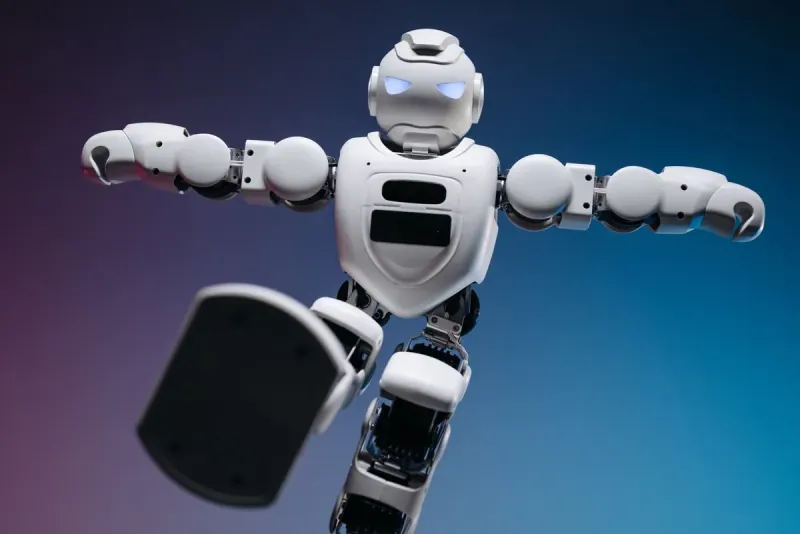
Humanoid Robots Become Widespread In Daily Household Tasks.
6ec83f59661e0ada · Resolution source: carscoops.com · carscoops.comHumanoid Robots Become Widespread In Daily Household Tasks.
Humanoid Robots Become Widespread In Daily Household Tasks. Probability: 40%. Confidence Level: Low.
Will Humanoid Robots Become Common In Homes By 2029?
Humanoid robots performing daily chores in homes may sound like science fiction, but recent advances in robotics are bringing this closer to reality. However, widespread adoption by 2029 remains uncertain. This article examines the feasibility, key challenges, and expert predictions.
What Is The Current State Of Humanoid Robots For Home Use?
As of 2025, humanoid robots are primarily deployed in controlled environments like factories and logistics centers. Companies such as Tesla (Optimus), Figure AI, and Boston Dynamics are testing prototypes for industrial tasks, not household chores. Home environments are unpredictable, with varying layouts, objects, and human interactions, making them far more complex for AI and robotics systems.
What Are The Main Technical Barriers For Home Robots?
1. Manipulation and Dexterity: Picking up a fragile glass, folding laundry, or cleaning under furniture requires advanced grip and force control. Current robots struggle with tasks that humans find trivial. 2. Navigation and Safety: Navigating cluttered rooms, avoiding pets, and operating safely around children demand robust sensors and real-time decision-making. 3. AI Understanding: Understanding natural language commands like "clean the kitchen" requires contextual reasoning, which remains an active research problem.
How Much Would A Home Humanoid Robot Cost?
Cost is a major hurdle. Current prototypes are estimated to cost between $50,000 and $150,000 per unit. For mass home adoption, the price must drop below $20,000, similar to a mid-range car. Economies of scale could help, but that requires high production volumes, which won't happen until reliability is proven.
Are There Any Pilot Programs For Home Robots?
Some companies are testing limited home trials. For example, in 2024, Figure AI partnered with a few households to test simple tasks like picking up toys (source: Figure AI press release). However, these are strictly supervised and not yet commercially available. Success of these pilots will determine if consumer-market entry is feasible by 2029.
What Do Industry Experts Predict For 2029?
Most robotics analysts agree that by 2029, humanoid robots will be common in industrial settings, but not in typical homes. A 2024 survey by the Robotics Industry Association found that only 15% of experts expect widespread home use by 2029 (source: RIA Annual Report 2024). The consensus is that true home deployment will arrive closer to 2035. 2040.
What Would Need To Happen For 2029 Adoption?
For the 40% probability to increase, three breakthroughs are necessary:
- Cost reduction by 70% through cheaper actuators and batteries.
- Reliability with a failure rate of less than one per 100 hours of operation.
- Regulatory approval for safe home use, including liability frameworks.
Given the current pace, these are unlikely in just four years.
Frequently Asked Questions
Will Humanoid Robots Replace Vacuum Cleaners And Dishwashers By 2029?
No. By 2029, single-purpose appliances will still dominate. Humanoid robots are not yet cost-effective or reliable enough to replace dedicated devices. They may handle tasks like picking up clutter, but full kitchen cleaning is unlikely.
How Much Will A Home Humanoid Robot Cost In 2029?
If any consumer models exist, they will likely cost between $30,000 and $50,000, making them a luxury item. Mass-market pricing below $10,000 is not expected until the 2030s.
What Is The Best Alternative To Humanoid Robots For Home Chores Today?
Currently, smart home appliances (robot vacuums, self-cleaning ovens) and on-demand human services are more practical. For those wanting automation, a combination of specialized devices offers better value than a humanoid robot.
Sources: Figure AI press release (2024); Robotics Industry Association Annual Report (2024); Boston Dynamics public demos (2023-2025).
Related Predictions
- Robotic Surgical Systems Enter Routine Use In Remote Surgery. 2029 · Robotics
- Industrial Robots Become Standard Across The Entire Manufacturing Sector. 2029 · Robotics
- The Global Commercial Robotaxi Fleet Reaches 500,000 Vehicles In 2029, Making Autonomous Rides A Mainstream Urban Transport Option In Major Cities. 2029 · Robotics
- By The End Of 2028, İn At Least One Country Worldwide, Annual İnstallations Of Medical Service Robots (including Surgical, Rehabilitation, And Hospital Logistics) Will Exceed 100,000 Units, And The Total Market Size For These Robots Will Approach The 20 Billion USD Threshold. 2028 · Robotics
- Robotic Surgical Systems Enable Remote Surgery. 2028 · Robotics