
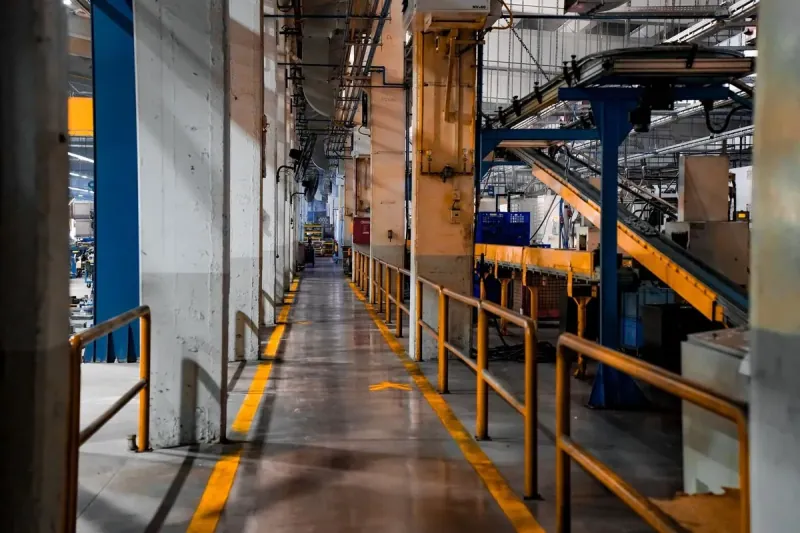
Industrial Robots Become Standard Across The Entire Manufacturing Sector.
d5c344a4f464f820 · Resolution source: link.springer.com · link.springer.comIndustrial Robots Become Standard Across The Entire Manufacturing Sector.
Industrial Robots Become Standard Across The Entire Manufacturing Sector. Probability: 48%. Confidence Level: Medium.
Will Industrial Robots Become Standard In All Manufacturing By 2029?
Industrial robots are increasingly common in manufacturing, but will they become the standard across the entire sector by 2029? Current data suggests a 48% probability, according to industry forecasts. This article examines the evidence, challenges, and key factors shaping this transformation.
What Does "Standard In All Manufacturing" Really Mean?
For industrial robots to be standard in all manufacturing, automation must reach every producer, regardless of size or niche. This includes small workshops, custom fabricators, and high-mix low-volume facilities, not just large automotive or electronics plants. The International Federation of Robotics (IFR) reports record robot installations, but adoption remains concentrated in specific industries.
How Are Cobots And Falling Costs Driving Adoption?
Collaborative robots, or cobots, are designed to work alongside humans without safety cages. Their lower price point and ease of programming make automation accessible to small and medium-sized enterprises (SMEs). For example, Universal Robots offers cobots starting under $25,000, significantly reducing the entry barrier. Additionally, the average cost of industrial robots has dropped by nearly 50% over the past decade, according to a 2023 report by McKinsey & Company.
Which Manufacturing Segments Might Resist Full Automation?
Despite rapid progress, certain segments remain resistant. Niche industries like bespoke furniture making, artisan food production, or specialized aerospace components often require high dexterity and customization that current robots cannot economically replicate. A 2024 survey by the National Association of Manufacturers found that 62% of small manufacturers cite high initial investment as a barrier, while 45% lack in-house automation expertise. Thus, manual processes will likely persist in these areas through 2029.
What Role Do Flexible Automation Solutions Play?
Flexible automation, including vision-guided robots and modular tooling, is key to expanding adoption. These systems allow quick reconfiguration for different tasks, making them viable for short production runs. For instance, companies like Fanuc and ABB now offer plug-and-play robotic cells that can be reprogrammed in minutes. This flexibility is critical for SMEs that produce varied products, as highlighted in a 2025 case study by the Robotics Industries Association.
How Fast Is The Current Growth Trajectory?
Robot adoption is growing at roughly 12% annually, per IFR data. However, to achieve universal standardization by 2029, growth would need to accelerate to over 25% per year, including all sub-sectors. Currently, only about 15% of manufacturing facilities globally use robots, with heavy concentration in automotive, electronics, and metal industries. The remaining 85% includes many SMEs and niche producers, making the 2029 target ambitious.
Frequently Asked Questions
Will Small Manufacturers Be Forced To Adopt Robots By 2029?
No, there is no regulatory mandate. However, competitive pressure may drive some SMEs to adopt cobots for cost efficiency. But many will continue manual methods for low-volume, high-customization work. A 2024 Deloitte study predicts that by 2029, only 35% of small manufacturers will have integrated any robotic automation, far from universal.
What Are The Main Barriers To Full Robot Standardization?
Key barriers include high upfront costs, lack of skilled programmers, and technical limitations in handling non-standard tasks. Additionally, integration with legacy equipment can be complex. A report by the Boston Consulting Group (2023) identifies that 70% of manufacturers cite payback periods longer than three years as a major deterrent, especially for smaller firms.
Could 2029 Be Too Early For This Transformation?
Yes, most analysts agree. While robots are becoming more accessible, full standardization across all manufacturing is a structural shift that typically takes decades. For example, the adoption of CNC machines took over 30 years to become widespread. Given current trends, a more realistic timeline for near-universal use is 2040, unless disruptive technologies like AI-driven automation dramatically accelerate progress before 2029.
Related Predictions
- Robotic Surgical Systems Enter Routine Use In Remote Surgery. 2029 · Robotics
- Humanoid Robots Become Widespread In Daily Household Tasks. 2029 · Robotics
- The Global Commercial Robotaxi Fleet Reaches 500,000 Vehicles In 2029, Making Autonomous Rides A Mainstream Urban Transport Option In Major Cities. 2029 · Robotics
- By The End Of 2028, İn At Least One Country Worldwide, Annual İnstallations Of Medical Service Robots (including Surgical, Rehabilitation, And Hospital Logistics) Will Exceed 100,000 Units, And The Total Market Size For These Robots Will Approach The 20 Billion USD Threshold. 2028 · Robotics
- Robotic Surgical Systems Enable Remote Surgery. 2028 · Robotics