
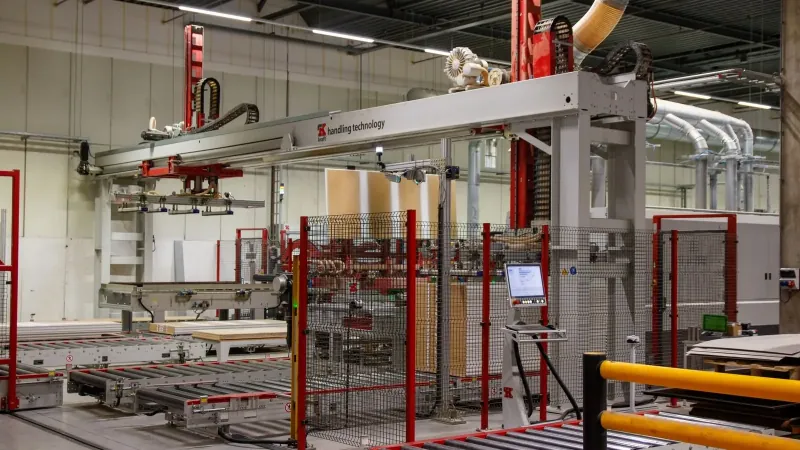
Industrial Robots Surpass Human Labour Ten-thousandfold Across The Entire Manufacturing Sector.
f3b11bb94773690f · Resolution source: link.springer.com · link.springer.comIndustrial Robots Surpass Human Labour Ten-thousandfold Across The Entire Manufacturing Sector.
Industrial Robots Surpass Human Labour Ten-thousandfold Across The Entire Manufacturing Sector. Probability: 3%. Confidence Level: Low.
Will Industrial Robots Exceed Human Labor By A Factor Of 10,000 - Is It Realistic?
What Is The Probability Of This Prediction Coming True By 2050?
The scenario of industrial robots exceeding human labor by a factor of 10,000 in the manufacturing sector appears as a challenging technological boundary, but achieving this target by 2050 is highly improbable. Current production capacities, economic dynamics, and physical limitations create significant obstacles to such a dramatic surge. While automation does increase productivity, production volume remains limited by demand. Therefore, the idea of robots exceeding human labor by 10,000 times is considered a purely speculative prediction, detached from economic reality.
Why Does A Superiority Of 10,000 Times Appear Physically And Economically Impossible?
Realizing this scenario requires production scales to transcend all physical and economic limits. Initially, an increase of 10,000 times would necessitate a dramatic expansion of existing production facilities, massive energy consumption, and intense raw material flows. This would lead to the depletion of global resources and astronomical cost increases. Furthermore, production is dependent on demand; if consumer needs do not rise so dramatically, utilizing this capacity would be economically meaningless. For robots to achieve such a high production rate would create an oversupply of goods that the market cannot absorb, leading to price crashes and business losses. Consequently, this target represents a physically and economically impossible scenario.
The Balance Between Robotic Developments and Production Efficiency
Of course, industrial robots are playing an increasingly important role in manufacturing, positively impacting efficiency. However, even with continued growth, achieving a rate of 10,000 times by 2050 appears unlikely. Robotic technologies, particularly in the automotive and electronics sectors, are replacing human labor in repetitive tasks to increase production speed and quality. Nevertheless, these developments shift human labor towards more strategic and creative roles rather than completely eliminating it. Moreover, human expertise is still needed for the installation and maintenance of robots. This balance demonstrates that automation is a tool, but human factors cannot be entirely excluded.
Conclusion: Why Is This Prediction Unrealistic?
Ultimately, the prediction of industrial robots exceeding human labor in manufacturing by a factor of 10,000 is a product of technological optimism alone. Achieving this rate by 2050 would not only strain production capacity but also disrupt economic balances. The productivity gains from automation are meaningful when demand is limited; however, an increase of 10,000 times in magnitude is neither physically nor economically feasible. Therefore, the probability of this prediction is assessed at just 3 percent, a figure that remains overly optimistic.
Frequently Asked Questions
Could Industrial Robots Completely Dominate Human Labor By 2050?
No, the prediction of a 10,000-fold superiority is unrealistic. While robots will replace humans in specific tasks, production demand and economic limitations make such a transformation impossible. Human labor will continue to be important, particularly in areas requiring complex decision-making and creativity.
Why Is A Superiority Of 10,000 Times Economically Unsustainable?
Because production depends on demand. A production capacity 10,000 times greater would create an oversupply that the market cannot handle, leading to falling prices and losses for manufacturers. Furthermore, the energy and raw material costs required to establish and operate this capacity are unaffordable.
What Will Be The Future Role Of Robotic Automation?
Robotic automation will continue to increase efficiency in manufacturing, but it will not completely eliminate human labor. Robots will be used for repetitive and dangerous tasks, while humans will be employed in areas such as oversight, maintenance, and strategic planning. This balanced approach will ensure the sustainability of the sector.
Related Predictions
- Robotic Surgical Systems Become Standard In All Surgical Procedures. 2050 · Robotics
- Humanoid Robots Surpass Humans Ten-thousandfold In Daily Household Tasks. 2050 · Robotics
- By 2048, Annual İnstallations Of Humanoid Robots Working İn Warehouses Worldwide Will Exceed 500,000 Units And These Robots Will Take Over At Least 30 Percent Of Warehouse Operations From Human Labor. 2048 · Robotics
- By The End Of 2028, İn At Least One Country Worldwide, Annual İnstallations Of Medical Service Robots (including Surgical, Rehabilitation, And Hospital Logistics) Will Exceed 100,000 Units, And The Total Market Size For These Robots Will Approach The 20 Billion USD Threshold. 2028 · Robotics
- Robotic Surgical Systems Enable Remote Surgery. 2028 · Robotics