
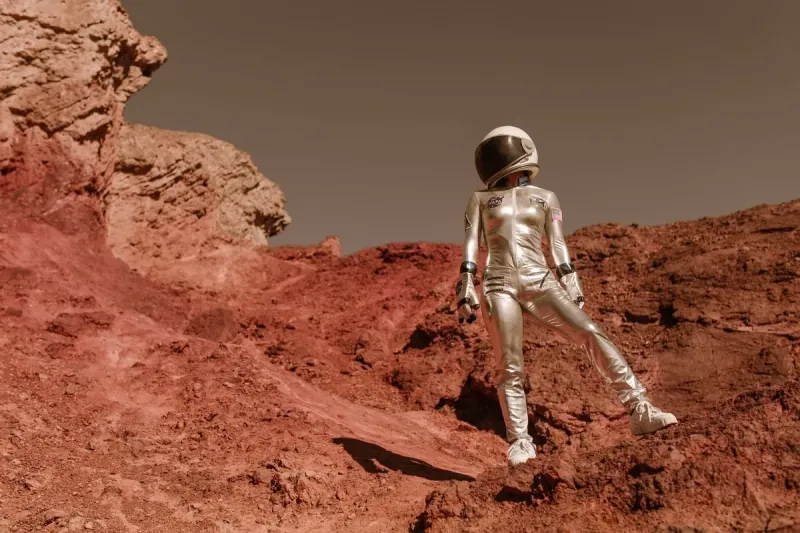
Mars Missions Achieve The First Crewed Landing.
afa6ac08ed415c69 · Resolution source: sabah.com.tr · A first for NASA after 54 years! Most important phase for crewed Mars mission: Officially ...Mars Missions Achieve The First Crewed Landing.
Mars Missions Achieve The First Crewed Landing. Probability: 15%. Confidence Level: Low.
First Human Landing On Mars - Will It Happen In 2030?
Mars missions are emerging as one of humanity’s most ambitious space goals. But can a first crewed landing be achieved by 2030? The answer depends heavily on technological readiness, budget, and international collaboration. Current estimates suggest this target is optimistic, with a probability of only around 15% of being realized.
Why Is A Crewed Mars Landing So Difficult?
The first human footsteps on the Martian surface are considered the most challenging task in space exploration history. This mission requires far more than simply launching a rocket. Astronauts need to survive a roughly 6-9 month journey, safely land on the Martian surface, and establish long-term life support systems there. Crucially, radiation protection, in-situ resource utilization (such as water and oxygen production), and technologies capable of operating independently from Earth are all critical. This massive technological and logistical preparation poses a significant obstacle for 2030.
Which Organizations Are Working Towards This Goal?
NASA’s “Moon to Mars” architecture and SpaceX’s Starship program represent the most concrete steps towards achieving this goal. NASA plans to establish a permanent base on the Moon through its Artemis program and leverage that experience for Mars. SpaceX aims to transport both crew and cargo to Mars using its fully reusable Starship vehicle. However, both programs face significant technical and budgetary challenges. Delays in Starship’s development and NASA’s budget constraints could lead to schedule disruptions.
What Are The Biggest Risks To The 2030 Target?
Many critical capabilities need to mature simultaneously for a crewed landing by 2030 to occur. These include long-duration life support systems, Mars atmospheric entry and descent technology, radiation shielding, and surface energy production. Furthermore, medical support systems for the crew’s psychological and physical well-being have yet to be fully tested. All these challenges increase the likelihood of the mission being delayed until later in the 2030s - a timeframe that many experts now consider more realistic.
Frequently Asked Questions
Why Is Sending Humans To Mars So Expensive?
Mars missions involve enormous costs, including rocket fuel, spacecraft production, life support systems, and launch infrastructure. For example, NASA’s Artemis program’s return mission already costs over $93 billion - a figure that could be several times higher for a Mars mission. Furthermore, each launch costs billions of dollars, and multiple launches are required to ensure success. This makes budget a major bottleneck.
What Technologies Will The First Humans On Mars Need?
The first humans will require in-situ resource utilization technologies such as oxygen production, water extraction (from ice or soil), and energy sources (solar or nuclear) to survive on the Martian surface. They’ll also need radiation-resistant habitats and spacesuits, communication systems with delayed data transmission, and autonomous medical devices. None of these technologies have been fully tested in Mars conditions yet.
If A Landing On Mars Doesn't Happen In 2030, What Is The Most Likely Timeframe?
Experts predict that a first crewed Mars landing could occur between 2035 and 2040, based on current development rates. This timeline is contingent on technological maturity, budgetary decisions, and international collaboration. For example, if SpaceX’s Starship proves successful and NASA secures increased funding, a launch as early as 2033 might be possible. However, given the current circumstances, the 2030 target remains quite optimistic.
Related Predictions
- The Moon Base Becomes A Permanent Settlement Of 1000+ People. 2030 · Space
- Asteroid Mining Delivers Its First Commercial Products. 2029 · Space
- Crewed Spacecraft For Mars Missions Are Launched. 2029 · Space
- The Moon Base Becomes A Permanent Human Settlement. 2029 · Space
- NASA's Artemis 3 Crewed Lunar Landing Will Have Occurred By The End Of 2031. 2031 · Space