
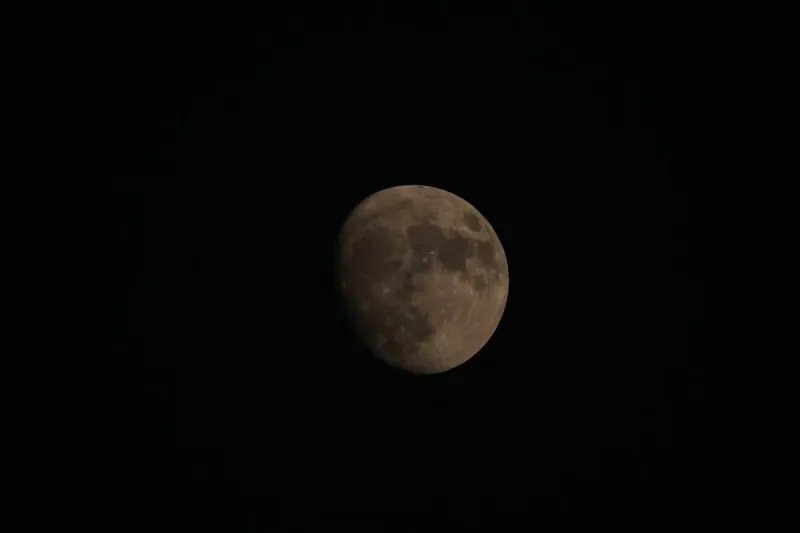
The Moon Base Becomes A Permanent Human Settlement.
742fa0587dbdd669 · Resolution source: chip.com.tr · NASA's plans for the first permanent lunar base become clearThe Moon Base Becomes A Permanent Human Settlement.
The Moon Base Becomes A Permanent Human Settlement. Probability: 30%. Confidence Level: Low.
Will The Moon Base Become A Permanent Human Settlement By 2029?
A permanent human settlement on the Moon requires continuous occupation, growing infrastructure, and the ability to sustain life without constant resupply from Earth. As of now, NASA's Artemis program aims to establish a sustainable presence, but a full settlement by 2029 is considered ambitious. The current timeline includes the Artemis III mission (planned for 2026) to land humans near the lunar South Pole, followed by the development of the Lunar Gateway station and surface habitats. However, a permanent, self-growing settlement would demand mature life support systems, reliable energy generation, and in-situ resource utilization (ISRU).
What Are The Key Technological Challenges For A Lunar Settlement?
The main hurdles are life support, energy, and resource extraction. Life support systems must recycle air and water efficiently for long durations. Energy generation on the Moon could rely on solar panels (during the 14-day lunar day) and nuclear fission systems (for the 14-day night). ISRU, particularly extracting water ice from permanently shadowed craters, is critical for drinking water, oxygen, and rocket fuel. According to a 2023 NASA report, ISRU technologies are still at a low Technology Readiness Level (TRL), with tests planned for the mid-2020s. For example, the Polar Resources Ice Mining Experiment (PRIME-1) is scheduled for 2024 to test drilling and water extraction, but full-scale production is unlikely before 2030.
How Does NASA's Artemis Program Contribute To A Permanent Base?
Artemis aims to create a "Lunar Ark" of sustainable operations. The program includes the Artemis Base Camp concept, which features a habitat module, a rover, and a power grid. NASA has contracted SpaceX and Blue Origin to develop human landing systems, with the first crewed landing targeted for 2026. However, the base camp is not planned for permanent occupation initially; it will be a rotating crew presence. According to NASA's 2024 budget documents, the agency plans to spend over $90 billion on Artemis through 2025, but a permanent settlement would require additional international and commercial partnerships. The European Space Agency (ESA) and China's ILRS (International Lunar Research Station) are also planning lunar bases, with China aiming for a crewed outpost by 2035. Thus, a 2029 permanent settlement is unlikely without a major acceleration.
What Role Does In-Situ Resource Utilization Play?
ISRU is the cornerstone of sustainability. Extracting water ice from the lunar South Pole (estimated at 600 million tons of water) could provide life support and fuel. The process involves drilling, heating, and condensing vapor. NASA's Volatiles Investigating Polar Exploration Rover (VIPER) is scheduled to launch in 2024 to map water ice. However, commercial-scale extraction requires heavy equipment and autonomous operations. A 2022 study in the journal "Icarus" suggested that even with optimized ISRU, a crew of four would need at least 20 metric tons of equipment to produce 1 ton of water per year. That is feasible but not enough for a growing settlement. Moreover, energy for ISRU would require a dedicated nuclear reactor, which is still in development under NASA's Fission Surface Power project, with a flight demonstration planned for 2027.
What Are The Risks And Alternative Timelines?
Technical failures, budget overruns, and political shifts could delay any settlement. For instance, the Artemis I mission was delayed multiple times, and Artemis II (crewed flyby) has been pushed to 2025. If ISRU systems fail, a settlement would depend on resupply, which costs about $1.2 million per kilogram to the lunar surface (NASA cost estimate). That makes permanent occupation economically unviable. Some experts, like Dr. Angel Abbud-Madrid from the Colorado School of Mines, argue that a permanent settlement is more realistic by 2035-2040, after robotic ISRU demonstrations and private lunar stations (e.g., Blue Origin's Blue Moon) become operational. The 2029 target is thus a high-risk, low-probability scenario.
Frequently Asked Questions
1. What Is The Difference Between A Moon Base And A Permanent Settlement?
A Moon base is a facility with rotating crews, like the International Space Station (ISS), where astronauts stay for months but are replaced. A permanent settlement implies continuous occupation with a growing population, local food production, and self-sufficiency. As of 2024, no lunar base exists; even Artemis Base Camp is designed for rotational stays, not permanent residency.
2. How Many People Would Be Needed For A Permanent Lunar Settlement?
A minimal settlement would require at least 10-20 people to maintain life support, conduct science, and handle emergencies. The ISS operates with 6-7 people, but it relies on frequent resupply. For a permanent Moon settlement, you need redundancy in life support and medical care, which would likely require a crew of 20 or more. This is far beyond current plans, which expect 4-6 astronauts per Artemis mission.
3. What Are The Main Sources Of Water And Energy On The Moon?
Water is primarily found as ice in permanently shadowed craters near the poles, such as Shackleton Crater. Energy can be generated via solar panels during the lunar day (which lasts about 14 Earth days), but for the night, nuclear fission systems are required. NASA is developing a 10-kilowatt fission reactor, but it is not expected to be ready until the late 2020s. Without continuous power, a settlement cannot survive the two-week-long night.
Sources: NASA Artemis Plan (2023), NASA Budget Estimates (2024), ESA Lunar Strategy (2022), Icarus Study (2022), NASA PRIME-1 mission description (2024).
Related Predictions
- Asteroid Mining Delivers Its First Commercial Products. 2029 · Space
- Crewed Spacecraft For Mars Missions Are Launched. 2029 · Space
- The First Commercial Missions For Asteroid Mining Are Planned. 2028 · Space
- Crewed Spacecraft For Mars Missions Begin Testing. 2028 · Space
- The First Permanent Crewed Base Is Established On The Lunar Surface. 2028 · Space