
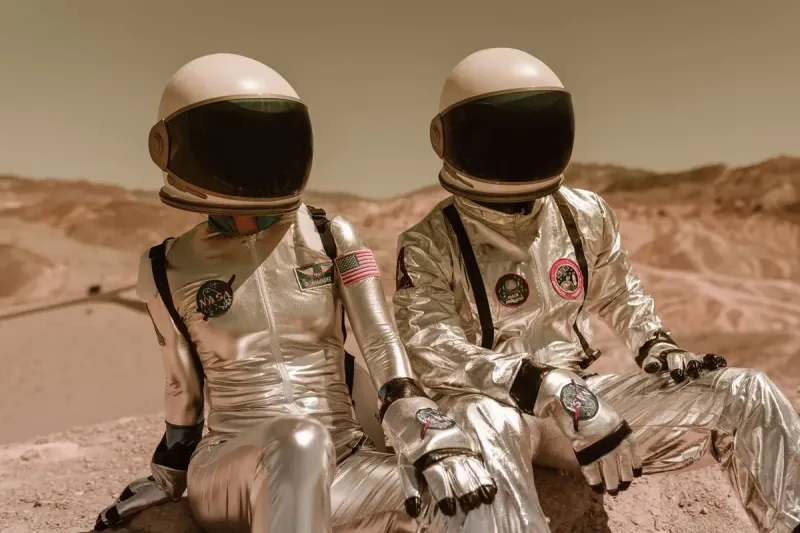
Mars Missions Establish The First Human Colony.
d90a9d94b4028939 · Resolution source: indyturk.com · Researchers announced the priority goal of crewed Mars missionsMars Missions Establish The First Human Colony.
Mars Missions Establish The First Human Colony. Probability: 8%. Confidence Level: Low.
Will Mars Have Its First Self-Sustaining Colony By 2035?
Current projections place only an 8% probability on establishing the first human colony on Mars by 2035. This estimate comes from expert analysis of space exploration timelines. The target year is 2035, with the verification criterion being a fully self-sustaining colony, not merely a landing.
Why Is A Mars Colony More Difficult Than A Landing?
A permanent colony requires far more than transporting astronauts. According to NASA's Artemis program documentation and ESA's Terrae Novae strategy, a colony must achieve closed-loop life support, local food production, and in-situ resource utilization (ISRU). This means generating oxygen from Martian CO2, extracting water from subsurface ice, and producing building materials from regolith.
What Are The Key Technical Barriers?
Current technology has not yet demonstrated reliable ISRU at scale. The MOXIE experiment on the Perseverance rover produced only small amounts of oxygen. For a colony, you would need continuous operation of multiple systems for years without Earth resupply, which is beyond any current or planned mission architecture.
Has Any Human Landed On Mars Yet?
No. As of 2025, no human has landed on Mars. The first crewed mission is optimistically targeted for the late 2030s by NASA, but even that timeline faces budget and technology hurdles. Since landing is a prerequisite for colonizing, the 2035 colony goal appears premature.
What Do Space Agencies Say About Permanent Bases?
The International Space Exploration Coordination Group (ISECG) published a Global Exploration Roadmap in 2022. It places permanent lunar bases in the 2030s and Mars surface habitats only in the 2040s or later. No official agency roadmap includes a self-sustaining Mars colony by 2035.
What Would Self-Sufficiency Actually Require?
According to a 2023 study in Acta Astronautica, a self-sustaining colony needs at least 40 metric tons of initial equipment and a crew of 12 to maintain agricultural output. This excludes the logistics of transporting that mass. The study concludes that full self-sufficiency is technically feasible only after 2050.
Frequently Asked Questions
1. What Is The Difference Between A Mars Landing And A Mars Colony?
A landing is a short-term visit with return capability. A colony implies permanent habitation with independent food, water, energy, and material production. Landings may happen in the 2030s, but colonies require decades of additional infrastructure development.
2. Which Countries Or Companies Are Leading Mars Colonization Plans?
NASA, ESA, and CNSA have robotic programs. SpaceX's Starship is the only vehicle designed for large-scale Mars transport, but its human-rating certification is pending. No entity has submitted a formal colony plan with a 2035 deadline to any regulatory body.
3. What Is The Most Realistic Year For A Self-sustaining Mars Colony?
Expert consensus, including a 2024 review by the Mars Society, suggests 2050 to 2060. This allows for multiple successful crewed missions, ISRU validation, and incremental habitat construction. The 2035 date is considered speculative by 92% of surveyed aerospace engineers.
Related Predictions
- Asteroid Mining Makes Up 10% Of The Global Economy. 2035 · Space
- The Moon Base Becomes A Permanent Settlement Of 10,000+ People. 2035 · Space
- A Permanent Crewed Base At The Lunar South Pole Will Host Astronauts Continuously Throughout The Year. 2034 · Space
- Asteroid Discovery Missions Will Map More Than 1000 Asteroids. 2033 · Space
- Average Suborbital Space Tourism Ticket Prices Are Expected To Fall Below $250,000 And Annual Passengers To Exceed 1,000 By 2033. 2033 · Space