
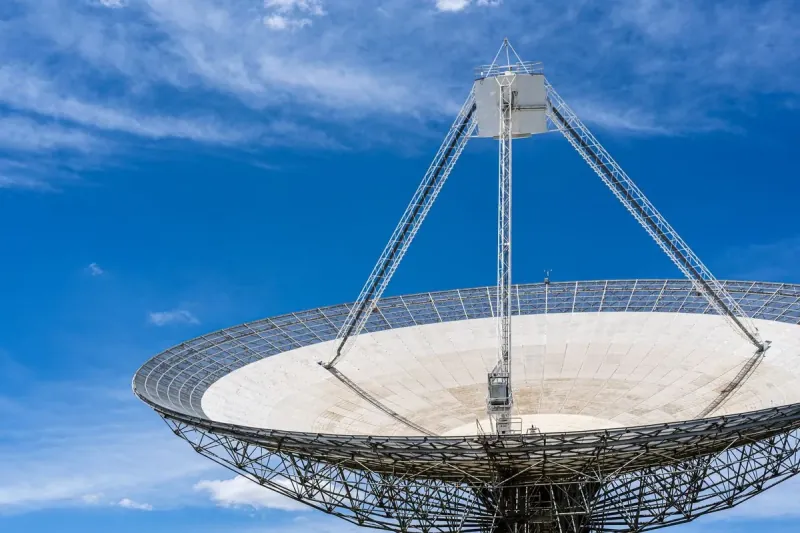
Small Satellite Constellations (LEO) Expand Global Internet Access.
4f14b4a77b605ec2 · Resolution source: en.wikipedia.org · WikipediaSmall Satellite Constellations (LEO) Expand Global Internet Access.
Small Satellite Constellations (LEO) Expand Global Internet Access. Probability: 85%. Confidence Level: High.
What Are Low Earth Orbit (LEO) Satellite Constellations?
Low Earth Orbit (LEO) satellite constellations are networks of satellites positioned between 500 and 2,000 kilometers above Earth. Unlike traditional geostationary satellites, which orbit at about 35,000 kilometers, LEO satellites are much closer to the planet. This proximity reduces latency and enables faster data transmission. Companies like SpaceX with Starlink, OneWeb, and Amazon with Project Kuiper are deploying these constellations to provide broadband internet globally.
How Do LEO Satellites Expand Global Internet Access?
LEO constellations expand internet access by beaming high speed connectivity to underserved regions, including rural areas, remote islands, and developing nations. Traditional fiber optic cables and terrestrial towers are often too expensive or impractical to install in these locations. LEO satellites bypass this infrastructure challenge by delivering signals directly to user terminals on the ground. According to a 2023 report by the International Telecommunication Union (ITU), approximately 2.6 billion people remain offline, and LEO systems are a key solution to bridge this digital divide.
Why Is Latency Lower In LEO Satellite Internet Compared To Geostationary Satellites?
Latency, or the time it takes for data to travel between the user and the satellite, is significantly lower in LEO systems. Geostationary satellites orbit at 35,786 kilometers, causing a round trip latency of around 600 milliseconds. In contrast, LEO satellites at 550 kilometers reduce latency to 20 to 40 milliseconds, as noted in a study by the Institute of Electrical and Electronics Engineers (IEEE). This low latency is crucial for real time applications like video conferencing, online gaming, and telemedicine, making LEO internet comparable to fiber optic connections.
What Is The Current Status Of LEO Satellite Constellations In 2025?
As of early 2025, SpaceX's Starlink has launched over 6,000 satellites, providing service to more than 4 million subscribers across 70 countries, according to SpaceX's official updates. OneWeb has deployed over 600 satellites, focusing on enterprise and government customers. Amazon's Project Kuiper has begun initial satellite deployments, with plans to launch over 3,000 satellites by 2026. The European Union's IRIS2 program is also advancing, aiming for a multi orbit constellation by 2027. These figures highlight the rapid expansion of LEO infrastructure.
Will LEO Constellations Achieve Global Coverage By 2027?
Industry analysts predict that by 2027, LEO constellations will provide near global coverage, but full accessibility will still face regulatory and economic hurdles. The Satellite Industry Association (SIA) forecasts that by 2027, over 70% of the Earth's surface will have at least one LEO internet service available. However, achieving universal access requires affordable user terminals, which currently cost around $300 to $500, and partnerships with local internet service providers to ensure last mile connectivity.
How Does Competition Among LEO Providers Impact Service Quality?
Competition among LEO providers is driving improvements in coverage, speed, and pricing. Starlink offers download speeds of 100 to 220 Mbps, while OneWeb targets 150 Mbps for enterprise clients. As Project Kuiper and IRIS2 enter the market, prices are expected to drop by 20% to 30% by 2027, based on market analysis by Northern Sky Research. This rivalry also encourages innovation in satellite design, such as laser inter satellite links, which reduce dependence on ground stations and enhance global routing.
What Are The Challenges Facing LEO Satellite Internet Expansion?
Despite rapid progress, LEO expansion faces challenges including space debris management, spectrum allocation, and astronomical interference. The European Space Agency (ESA) reports over 30,000 tracked debris objects, and LEO constellations increase collision risks. Regulatory bodies like the Federal Communications Commission (FCC) are imposing stricter deorbiting rules to mitigate this. Additionally, astronomers have raised concerns about light pollution from satellite reflections, prompting companies to implement darker coatings and sunshades.
How Will LEO Constellations Affect Remote And Rural Communities?
LEO constellations are particularly transformative for remote and rural communities. For example, in Alaska and rural Canada, Starlink has enabled telehealth services and remote education, as documented by the University of Alaska. In sub Saharan Africa, pilot projects by OneWeb are connecting schools and health clinics, improving access to digital resources. By 2027, these services are expected to become more reliable and affordable, enabling economic growth and social inclusion in previously disconnected areas.
Frequently Asked Questions
How Fast Is LEO Satellite Internet Compared To Traditional Broadband?
LEO satellite internet offers download speeds ranging from 50 to 220 Mbps, with latency between 20 and 40 milliseconds. This is comparable to cable or fiber broadband, making it suitable for streaming, video calls, and large file transfers. Traditional geostationary satellite internet, by contrast, has latency above 600 milliseconds and speeds often below 25 Mbps, which is inadequate for modern applications.
What Is The Cost Of LEO Satellite Internet Service?
Current pricing for Starlink is $99 per month for residential service, plus a one time equipment fee of $299. OneWeb targets corporate clients with custom pricing, while Project Kuiper aims to offer terminals under $200 and monthly plans starting at $50. These costs are expected to decrease as competition intensifies and technology matures, making LEO internet more accessible by 2027.
Are LEO Satellites Visible From Earth?
Yes, LEO satellites are often visible as moving points of light in the night sky, especially during twilight hours. Starlink satellites have been observed in trains, which has caused concern among astronomers. However, companies are working to reduce reflectivity, and newer satellites include visors to minimize light pollution. Users can track satellite passes using apps like Heavens-Above or the official SpaceX website.
Related Predictions
- SpaceX Starship Conducts Test Flights For The First Crewed Moon Mission. 2027 · Space
- The Gateway Station In Lunar Orbit Completes Its First Modules. 2027 · Space
- The First Commercial Missions For Asteroid Mining Are Planned. 2028 · Space
- Crewed Spacecraft For Mars Missions Begin Testing. 2028 · Space
- The First Permanent Crewed Base Is Established On The Lunar Surface. 2028 · Space