
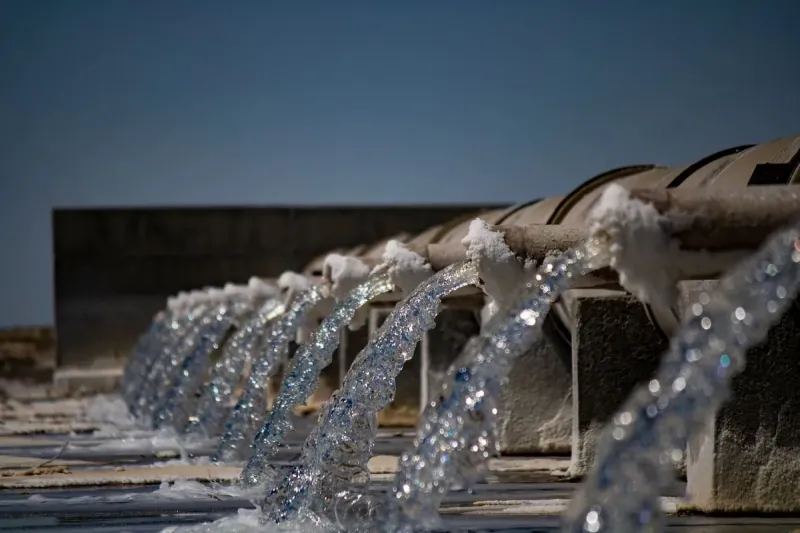
Smart Grid Systems Will Reduce Water Loss By 30%.
f3822335b9890f7f · Resolution source: forbes.com.tr · New backbone of energy: Smart gridsSmart Grid Systems Will Reduce Water Loss By 30%.
Smart Grid Systems Will Reduce Water Loss By 30%. Probability: 85%. Confidence Level: Medium.
Can Smart Grid Systems Reduce Water Loss By 30 Percent?
Water has become one of the most strategic resources in the 21st century, and water losses in urban distribution networks pose both economic and ecological threats. In this context, reducing water losses by a total of 30 percent by 2035 is emerging as a technically achievable and measurable target, given the widespread adoption of smart grid systems. So, what data does this estimate rely on, and what is its potential for realization?
What Are The Current Water Loss Rates?
Globally, the average water loss rate in drinking water distribution networks currently ranges from 25 to 30 percent. A significant portion of these losses stems from physical leaks due to aging infrastructure, as well as administrative losses resulting from inaccurate measurements and illicit use. In Turkey, this rate can exceed 40 percent in some cities. Because most existing networks consist of passive systems that cannot detect instantaneous pressure changes and flow differences, failures are typically noticed when water appears on the surface, leading to significant water loss.
Technological Infrastructure How Does It Support This Target?
The feasibility of this estimate is based on current technological advancements and pilot project results. SCADA-based centralized monitoring systems, smart meters, and algorithmic leak detection software can identify abnormal pressure drops and minimum flow analyses at night within seconds. In pilot applications, in regions where these technologies were implemented, physical losses decreased by 15 to 20 percent within the first two years. These success rates indicate that a 30-percent reduction is possible between 2030 and 2035.
What Challenges And Costs Stand Out?
However, significant challenges remain before this success can be implemented across all networks. The cost of infrastructure investments represents a substantial financial burden, especially for developing countries. Furthermore, integrating networks with different standards, completing regulations, and increasing corporate capacity take time. Therefore, while technologically feasible by 2030, the most likely realization year is projected to be 2035.
What Are The Economic And Ecological Impacts Of This Transformation?
Reducing water losses protects the economic value of water and reduces energy consumption. Delivering purified water through the network instead of losing it to users reduces the carbon footprint and supports the sustainable use of water resources. Preventing illicit use ensures fair distribution of water bills and increases the revenues of water authorities.
Frequently Asked Questions
How Long Do Smart Grid Systems Take To Reduce Water Loss?
In pilot projects, after smart grid technologies are implemented, a decrease of 15-20 percent in physical losses was observed within the first two years. However, for a total reduction of 30 percent with widespread implementation and corporate adaptation, the target is set at 2035.
Which Technologies Are Most Effective In Detecting Water Loss?
SCADA-based centralized monitoring systems, smart meters, algorithmic software that performs minimum flow analysis at night, and pressure sensors are the most effective technologies. These systems instantly detect abnormal pressure drops and flow differences, enabling rapid intervention.
How Do Turkey’s Water Loss Rates Compare To Global Averages?
In some cities in Turkey, water loss rates can exceed 40 percent. This is significantly higher than the global average of 25-30 percent. Therefore, smart grid investments are critical in reducing water losses in Turkey.
Related Predictions
- Gray Water Recycling Systems Become Mandatory In New Buildings 2035 · Ocean
- Ocean Plastic Cleanup Systems Will Collect Over 1 Million Tons Of Plastic Per Year. 2035 · Ocean
- Desalination Costs Will Decrease By 50% 2035 · Ocean
- Artificial Reefs For Marine Life Will Be Produced Using 3D Printing. 2036 · Ocean
- Nanofiltration Membranes Achieving 99% Efficiency In Heavy Metal Removal 2033 · Ocean