
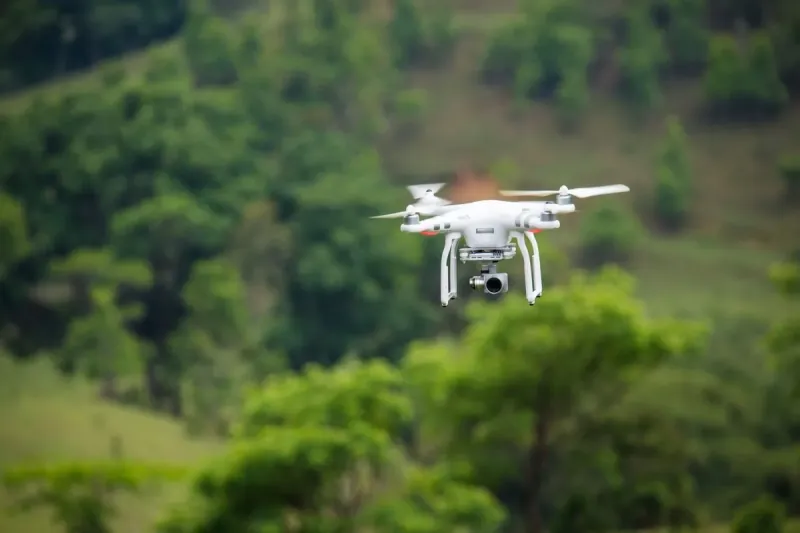
Widespread Use Of Swarm Drones In Military Operations
2735d736f9d4a787 · Resolution source: teknotalya.com · The Future of War: Military Swarm Drones and Digital TransformationWidespread Use Of Swarm Drones In Military Operations
Widespread Use Of Swarm Drones In Military Operations Probability: 50%. Confidence Level: Medium.
Drone Swarms In Military Operations By 2036?
The paradigm shift in defense technology is accelerating with the evolution of unmanned systems from autonomy to swarm intelligence. By 2036, a foreseeable scenario involves the inclusion of coordinated autonomous drone swarms within the combat operations doctrine of multiple countries, driven by technological maturation and military needs. The question remains: will this technology truly become widespread? What challenges need to be overcome?
Where Do Drone Swarms Stand Today?
Currently, drone swarms have yet to transcend experimental exercises and limited-scale conflicts. Observations in Ukraine and the Nagorno-Karabakh conflict regarding unmanned aerial vehicle (UAV) usage are largely confined to reconnaissance and strike missions conducted by individuals or small groups. While countries like the United States, China, and Turkey are testing their own swarm algorithms, there is no official validation of these systems being used with full autonomous decision-making capabilities without centralized command environments. The current barriers stem from a need for reliable machine learning models alongside robust sensor fusion to ensure friend-foe differentiation.
What Factors Would Accelerate The Proliferation Of Drone Swarms?
The primary driver accelerating the proliferation of drone swarms is cost-effectiveness. Compared to the cost of a high-tech warplane, the mass production of hundreds of simple, single-task drones offers numerical superiority economically viable. Furthermore, embedded artificial intelligence algorithms capable of continuing operations even in communication network disruptions enhance resilience against electronic warfare threats. These features make drone swarms attractive, particularly for cost-sensitive militaries. For example, a coordinated attack by dozens of drones to breach a missile defense system could be far more effective than the failure of a single expensive projectile.
What Challenges Need To Be Addressed By 2036?
However, two critical challenges stand in the way of full proliferation by 2036. Firstly, countermeasures - laser weapons and wideband spectrum jammers - could disrupt swarm coordination. Secondly, are the ethical and legal frameworks. The autonomous selection of targets by systems on the battlefield without human authorization raises significant debates within international law. Additionally, software updates and maintenance for drone swarms could represent a logistical burden. Therefore, while widespread use may be possible in 2036, it is more realistic to assess that semi-autonomous, human-supervised swarms would replace fully autonomous, uncommanded drone swarms.
Validation Criteria and Expectations
To validate the assessment, evidence must be provided through official or independent reports demonstrating coordinated autonomous drone swarms being operated on the battlefield by multiple countries. The probability of this criterion being realized by 2036 is estimated at 50 percent. While technological maturation rates and military budget shifts strengthen expectations, advancements in countermeasures and ethical discussions could limit proliferation. Consequently, drone swarms will likely feature within tactical doctrines, but widespread adoption will require balancing cost and countermeasure effectiveness.
Frequently Asked Questions
What’s The Fundamental Difference Between Drone Swarms And Traditional UAVs?
Drone swarms can coordinate movement by communicating with each other without centralized command, unlike traditional UAVs which are typically operated by a single operator. Swarm algorithms provide task allocation and adaptive decision-making capabilities.
What Is The Biggest Military Advantage Of Drone Swarms?
The greatest advantage is cost-effectiveness and numerical superiority. Hundreds of drones can overwhelm expensive defense systems and continue operations despite electronic warfare and communication disruptions. Furthermore, the loss of a single drone does not jeopardize the success of the operation.
Is It Expected That Drone Swarms Will Be Fully Autonomous By 2036?
No, full autonomy of swarms is not anticipated due to ethical and legal reasons. A more likely scenario involves human-supervised, semi-autonomous flocks. Human operators would retain control over target authorization and critical decisions, while swarm-level coordination would be handled autonomously.
Related Predictions
- Biological Threat Early Warning Networks Will Be Operating On A Global Scale. 2036 · Defense
- AI-assisted Intelligence Analysis Will Dominate All Decision-making Processes. 2036 · Defense
- A Major Military's Inventory Is Expected To Include Tens Of Thousands Of Autonomous Swarm Drones, With Fully Autonomous Swarm Tactics Entering Military Doctrine By 2036. 2036 · Defense
- Autonomous Drone Swarms Become A Standard Unit In At Least One Major Power's Combat Doctrine, And The First Fully Autonomous (Human-out-of-the-loop) Combat Engagement Is Publicly Documented. 2036 · Defense
- AI-powered Cyber Defense Will Protect All Critical Infrastructures. 2035 · Defense