
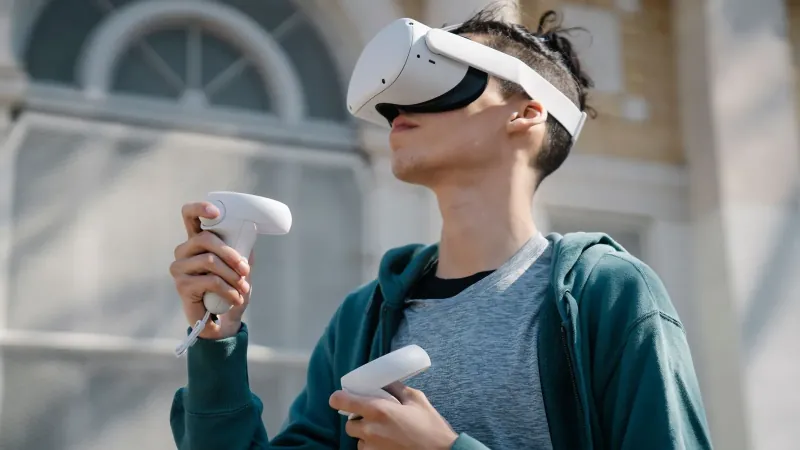
XR Device Sales Will Reach 49.5 Million In 2030
8bab8928a42c3c04 · Resolution source: uctoday.com · The Future of XR: What Will the Industry Look Like in 2030?XR Device Sales Will Reach 49.5 Million In 2030
XR Device Sales Will Reach 49.5 Million In 2030 Probability: 85%. Confidence Level: Medium.
XR Device Sales Could Reach 49.5 Million In 2030?
Virtual and augmented reality (XR) technologies continue to be one of the most talked-about but commercially slowest-maturing areas of digital transformation. The forecast that global XR device sales will reach 49.5 million units annually by 2030 signals the end of a decade-long acceleration period for the industry, indicating an achievement of a certain level of maturity. While this target represents just a small slice of today’s smartphone market, it's a critical threshold that could unlock the mass market for XR. How realistic is this prediction? What dynamics will trigger this growth?
Where Does The XR Market Stand Today?
Currently, the XR market occupies a niche segment with sales hovering below approximately 10 million units annually. Meta’s Quest series maintains leadership in the consumer market thanks to its price-performance balance, while high-priced devices like Apple Vision Pro are still targeting developer and professional user bases. Key factors limiting market growth include a lack of content ecosystems, ergonomic issues with devices, and unaccepted usage scenarios. Fluctuations in global chip supply chains and prices remaining above $500 also stand out as other factors directly affecting adoption rates.
What Factors Will Trigger This Growth?
The strongest dynamic increasing the likelihood of this prediction is the sharp shift in strategic orientations of technology giants. Despite losses, Meta continues to invest billions of dollars in its Reality Labs division, while Apple’s entry has noticeably increased the interest of ecosystem developers. Furthermore, the widespread adoption of 5G infrastructure and a decrease in cloud computing costs could enable lighter and more durable devices by reducing the processing power needs of standalone (standalone) devices. Usage of XR in industrial applications (remote maintenance, training simulations, healthcare) could drive corporate demand and support sales.
What Thresholds Need To Be Reached To Achieve The 49.5 Million Unit Target?
A rich content ecosystem, device prices falling into the $300-$400 band, and increased social acceptance are needed for mass adoption. The widespread proliferation of non-gaming use cases (social interaction, education, remote work) could transform the market from niche to mainstream. Furthermore, solving battery life and ergonomics issues would be key factors directly improving the consumer experience.
Frequently Asked Questions
What Does The 2030 Target In XR Device Sales Rely On?
The target is based on current growth rates and the reasonable expectation that by 2030, this level will be reached due to investments from companies like Meta and Apple. However, given that the market has not yet reached a mass adoption threshold, the probability is moderate (%85).
Which Companies Are Shaping The XR Market?
Meta leads in the consumer market with its Quest series; Apple is effective in the professional and developer segment with Vision Pro. Google, Samsung, and Sony also have active roles in the AR/VR space.
What Is The Most Critical Obstacle To The Widespread Adoption Of XR Devices?
The most critical obstacle is the lack of a content ecosystem and high device prices. Ergonomics and social acceptance are also significant obstacles. It’s unlikely sales will reach 49.5 million without addressing these issues.
Related Predictions
- Spatial Computing Revenue Is Expected To Reach $60.4 Billion By 2030. 2030 · Virtual
- The Metaverse Real Estate Market Will Reach $8.61 Billion By 2030 2030 · Virtual
- Smart Glasses Become Lightweight And Natural-looking 2030 · Virtual
- The Metaverse Market Reaching $100 Billion In The Enterprise Sector 2030 · Virtual
- By 2041, XR Glasses Sales Will Surpass Headset Sales, And Optical See-through Glasses Will Account For More Than Half Of The Total XR Market. 2041 · Virtual