
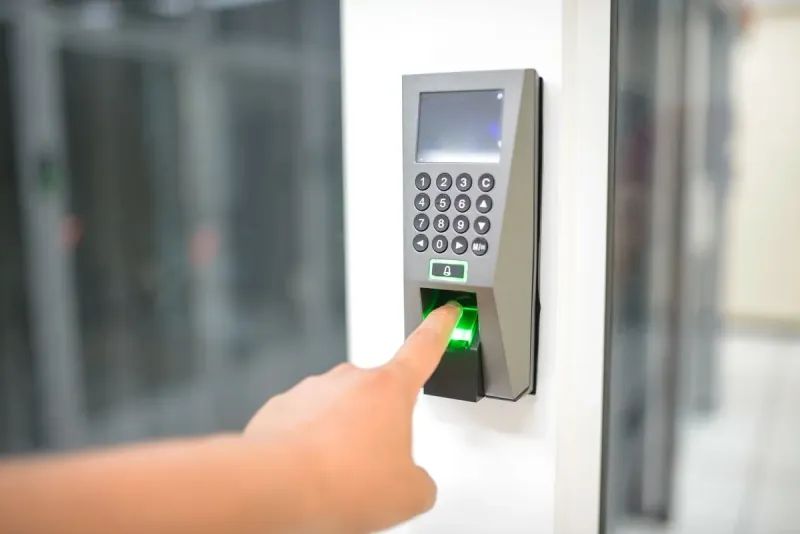
AI-based Identity Fraud Detection Will Achieve 99.9% Accuracy.
474380030a28890e · Resolution source: blog.arksigner.com · Identity Verification with Artificial IntelligenceAI-based Identity Fraud Detection Will Achieve 99.9% Accuracy.
AI-based Identity Fraud Detection Will Achieve 99.9% Accuracy. Probability: 80%. Confidence Level: Medium.
Artificial Intelligence-Based Identity Verification - Can It Achieve 99.9% Accuracy By 2035?
Can Artificial Intelligence-based Identity Verification Achieve 99.9% Accuracy By 2035?
Digital age security vulnerabilities, such as identity fraud, are becoming increasingly complex, moving beyond traditional passwords and security questions. The proliferation of deepfake technology and synthetic identity creation is challenging existing validation systems, but AI-powered solutions are emerging as the most promising defense against this threat. Industry experts predict that combining deep learning with biometric data (face, voice, behavior) will reduce error rates annually and reach a 99.9% accuracy threshold by the mid-2030s.
Which Errors Are Artificial Intelligence Reducing In Identity Verification?
Today, financial institutions and government agencies are moving towards multi-factor authentication methods for identity verification. However, current systems relying on a single biometric data source, such as facial recognition or fingerprint scanning, can be deceived by high-quality deepfake videos or manipulated biometric templates. Industry reports show that the false acceptance rates of even the best commercial systems still range from 1% to 2%, while false rejection rates negatively impact user experience. This creates both a security vulnerability and an accessibility problem. AI-based systems aim to minimize these errors with multi-modal verification.
What Technologies Are Needed For 99.9% Accuracy?
This prediction relies on advancements in deep learning algorithms and developments in biometric data fusion (face, voice, behavioral analysis). Multi-modal systems reduce error margins by cross-validating inconsistencies across different data sources. For example, if a perpetrator mimics someone’s face, the variations in tone of voice or behavioral microexpressions create discrepancies. Furthermore, liveness detection technologies - detecting whether a subject is truly present - can identify fraudulent attempts in real time using photos or videos. Combining these technologies could bring false acceptance rates below 0.1%.
Why Is 99.9% Accuracy Critical In Independent Tests?
The criteria for validation are demonstrated independent tests or industry reports showing false acceptance/rejection rates below 0.1%. This proves that systems are reliable not just within a lab environment but also under real-world conditions. Independent testing also reveals algorithmic biases and performance across different demographic groups. For example, it’s known that some systems have higher error rates with specific ethnic groups or older users. Therefore, the 99.9% accuracy target must mean equally high performance for all groups, not just an average.
What Are The Challenges To Achieving This Target?
There are significant challenges to achieving this goal: the privacy of biometric data, the impact of algorithmic bias on minority groups, and attackers’ attempts to bypass defense systems using artificial intelligence. Deepfake technology is becoming increasingly realistic with each passing day, requiring continuous updates to detection systems. Furthermore, the collection and processing of users' biometric data increases the risk of data breaches. Therefore, a 99.9% accuracy target must be supported not only by algorithmic improvements but also by robust data protection laws and ethical frameworks.
Frequently Asked Questions
How Accurate Are AI-based Identity Verification Systems Currently?
Currently, the false acceptance rates of the best commercial systems range from 1% to 2%. False rejection rates can negatively impact user experience. These rates are far from providing sufficient security against deepfake attacks.
What Metric Is 99.9% Accuracy Measured By?
Accuracy is measured by two key metrics: false acceptance rate (FAR) and false rejection rate (FRR). 99.9% accuracy means that both FAR and FRR values are below 0.1%. This optimizes both security vulnerabilities and user accessibility.
Which Sectors Will This Technology Be Prioritized In?
Financial institutions, government agencies, healthcare services, and e-commerce platforms are the sectors with the highest security needs regarding identity verification. Multi-modal AI-based validation systems are expected to become standard across these sectors by 2035.
Related Predictions
- Digital Identities Achieve Universal Access 2035 · Security
- Zero Trust Architecture Will Become Standard Across All Organizations. 2035 · Security
- AI-powered Cyber Threat Detection Operates With 99% Accuracy 2035 · Security
- Biometric Authentication Will Be Used In All Digital Transactions 2035 · Security
- By 2034, At Least 60 Percent Of Digital İdentity Transactions Worldwide Will Be Protected By Multi Factor Authentication Combining Device Bound Cryptographic Keys With Biometrics İnstead Of Traditional Passwords. 2034 · Security