
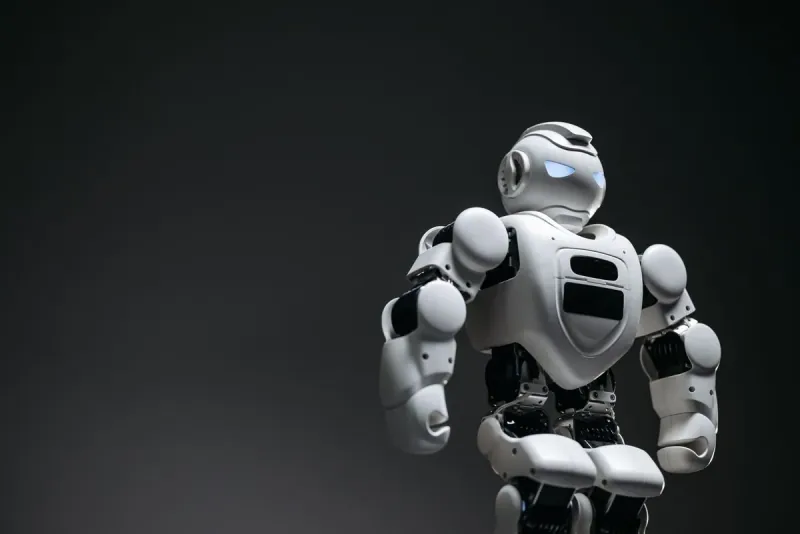
Annual Sales Of Home Humanoid Robots Are Expected To Exceed 1 Million Units By 2037.
657efc97fed81dd4 · Resolution source: goldmansachs.com · goldmansachs.comAnnual Sales Of Home Humanoid Robots Are Expected To Exceed 1 Million Units By 2037.
Annual Sales Of Home Humanoid Robots Are Expected To Exceed 1 Million Units By 2037. Probability: 40%. Confidence Level: Medium.
When Will Home Humanoid Robot Sales Reach 1 Million Units Annually?
A market forecast suggests that annual sales of home humanoid robots will exceed 1 million units by 2037, with a 50% probability. This prediction is based on industry reports from Goldman Sachs and Interact Analysis. The current state of the market in 2026 is still early, with shipments below 100,000 units and demand driven by pilot programs, subsidies, and strategic partnerships.
What Are The Key Market Projections For 2035 And 2037?
Goldman Sachs projects that the humanoid robot market will reach $38 billion and 1.4 million annual shipments by 2035. The same report indicates that consumer robot sales will surpass 1 million units annually in just over a decade. Interact Analysis offers a more conservative estimate, forecasting over 700,000 shipments by 2035. These figures suggest that crossing the 1 million threshold by 2037 is a plausible mid-term scenario.
What Is The Current State Of Home Humanoid Robots In 2026?
As of 2026, the home humanoid robot market is nascent. Annual shipments remain under 100,000 units. Demand is largely shaped by small-scale deployments, government subsidies, and strategic corporate partnerships. Home use lags behind industrial applications due to safety concerns and environmental complexity. For example, 1X Technologies offers its NEO robot at a monthly rental of $499 or an early access price of $20,000, providing a concrete price reference for households.
How Do Cost Trends Affect Mass Adoption?
The cost curve is the decisive variable for mass adoption. In China, material production costs are expected to drop below $17,000 by 2030. Analysts indicate that the $5,000 to $10,000 price band, necessary for mass-market home robots, will likely be reached between 2035 and 2040. According to the International Federation of Robotics (IFR), approximately 20 million consumer service robots were sold in 2024, demonstrating that households are willing to pay for robotic assistance.
What Are The Main Barriers To Home Deployment?
Safety certification, embodied AI reliability, and service infrastructure remain critical barriers. Bank of America describes home humanoid robots as a 2040s story, predicting 0.7 robots per household at maturity. This suggests that while technical progress is rapid, regulatory and operational hurdles will delay widespread residential adoption beyond the initial cost milestones.
Which Sources Support The 2037 Forecast?
Goldman Sachs projects $38 billion market size and 1.4 million annual shipments by 2035. Interact Analysis forecasts over 700,000 shipments in 2035. The International Federation of Robotics (IFR) reported about 20 million consumer service robots sold in 2024. Bank of America predicts 0.7 home robots per household by the 2040s. These sources collectively frame the 2037 target as achievable but conditional on continued cost reduction and safety validation.
Frequently Asked Questions
Will Home Humanoid Robots Be Affordable For Average Families By 2037?
Affordability depends on production cost declines. Chinese manufacturing costs are expected to fall below $17,000 by 2030. The $5,000 to $10,000 range, considered the tipping point for mass adoption, is projected for 2035 to 2040. Therefore, by 2037, early mainstream pricing may be possible, but not guaranteed across all markets.
How Does Home Robot Safety Certification Impact The 2037 Timeline?
Safety certification is a major gating factor. Home environments are unstructured and require rigorous testing for human interaction. Regulatory bodies have not yet established universal standards for humanoid robots. Delays in certification frameworks could push the 1 million unit milestone beyond 2037, even if cost targets are met.
What Is The Difference Between Home Service Robots And Humanoid Robots?
Home service robots, such as vacuum cleaners, are task-specific and reached 20 million units sold in 2024 per IFR. Humanoid robots are general-purpose, bipedal machines designed for diverse household tasks. The latter face higher technical complexity, safety risks, and costs. Thus, humanoid adoption will follow a slower trajectory despite the proven consumer willingness to pay for simpler robotic devices.
Related Predictions
- Consumer Humanoid And Home Robot Sales Exceed 1 Million Units Annually In 2037, Normalizing Household-chore Robots Among Early-adopter Homes. 2037 · Robotics
- By 2035, Robotic Surgical Systems Become Standard In All Surgical Procedures. 2035 · Robotics
- By 2035, Industrial Robots Surpass Human Labour Tenfold Across The Entire Manufacturing Sector. 2035 · Robotics
- By 2035, Humanoid Robots Surpass Humans Tenfold In Daily Household Tasks. 2035 · Robotics
- Annual Humanoid Robot Shipments Exceed 1 Million Units And Market Value Surpasses $30 Billion In 2035, Making Robots Standard In Dangerous And Labor-starved Jobs. 2035 · Robotics