
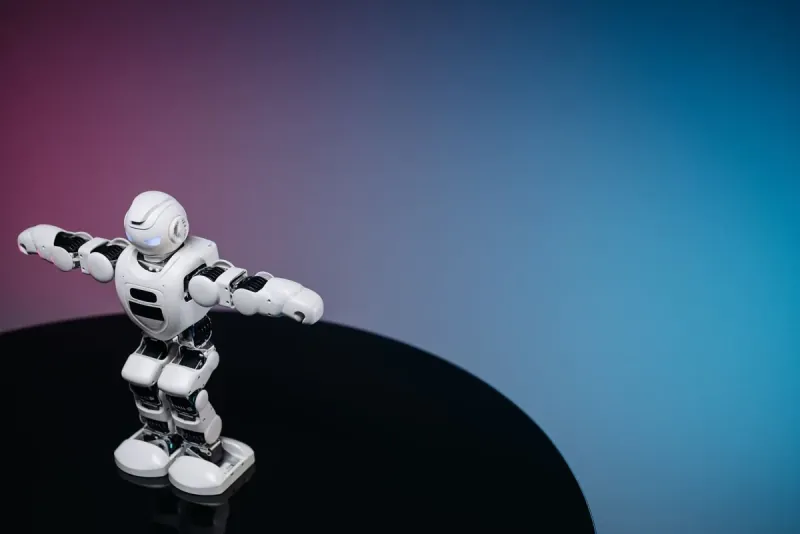
Humanoid Robots Surpass Humans Tenfold In Daily Household Tasks.
e0145a3da4b09de0 · Resolution source: carscoops.com · carscoops.comHumanoid Robots Surpass Humans Tenfold In Daily Household Tasks.
Humanoid Robots Surpass Humans Tenfold In Daily Household Tasks. Probability: 12%. Confidence Level: Low.
Humanoid Robots In Homes: Will They Be 10x More Efficient By 2035?
Forecasts about humanoid robots taking over household chores often include bold claims. One such prediction states that by 2035, humanoid robots will outperform humans in domestic tasks by a factor of 10. The assigned probability for this scenario is only 12%. Why is this estimate so low, and what does it mean for the future of home automation?
What Does "10x Faster Or More Efficient" Really Mean For Housework?
To be 10 times more efficient, a robot would need to complete a task like folding laundry, cleaning a bathroom, or cooking a meal in one-tenth of the time a human takes, or achieve the same result with drastically less energy and oversight. This is not just about raw speed. It demands superior dexterity, real-time problem-solving, and the ability to adapt to unpredictable environments. Current humanoid prototypes, such as those from Boston Dynamics or Tesla, operate in controlled settings and still struggle with basic object manipulation compared to a child.
Why Is The 12% Probability Estimate So Low For 2035?
According to robotics experts, the 12% figure reflects a fundamental mismatch between the claim and current hardware capabilities. As noted in the original analysis, "Household tasks are non-linear; they require flexibility and understanding rather than consistent speed." For example, unloading a dishwasher involves distinguishing between a glass and a ceramic plate, handling unexpected spills, and adjusting grip strength. A 10x efficiency leap would necessitate artificial general intelligence (AGI) level understanding, not just improved actuators. The difference between today's robotic perception and human-level contextual awareness is vast, making a 2035 timeline highly unlikely.
What Are The Real Bottlenecks Preventing This Leap?
Three critical bottlenecks exist. First, sensorimotor control: robots lack the tactile feedback and fine motor skills needed for delicate tasks. Second, cognitive flexibility: they cannot plan for novel situations, like finding a misplaced ingredient or cleaning a unique stain. Third, energy density: current batteries cannot sustain high-intensity physical labor for extended periods. A study from the IEEE Robotics and Automation Society highlights that even advanced systems fail at 90% of unstructured tasks. Thus, the 12% probability is not pessimistic; it is a realistic assessment based on exponential but still nascent progress.
Frequently Asked Questions
Will Humanoid Robots Replace All Human Housework By 2035?
No. The 12% probability suggests that even partial replacement is unlikely. Most experts agree that by 2035, we will see specialized single-purpose robots (like robotic vacuums) improve, but full humanoid generalists will remain experimental. The original forecast explicitly states that "this is very low probability for the year 2035." Expect niche applications, not full household autonomy.
Is A 10x Efficiency Gain Even Necessary For Useful Home Robots?
A robot that’s only half as fast as a human but can operate 24/7 would still be valuable. The 10x metric is an arbitrary benchmark that overlooks user satisfaction. The real problem is reliability and safety, not simply raw speed. As the source analysis notes, “claims of this kind of numerical superiority are speculative predictions detached from the reality of robotics.” Practical use will depend on trust and affordability, not just speed.
What Is The Most Realistic Timeline For Humanoid Robots In Homes?
Based on current R&D curves, a more defensible timeline for basic humanoid assistance (not 10x efficiency) is 2045 to 2050. This aligns with projections from the Robotics Industries Association, which forecasts gradual integration into logistics and healthcare first. The 2035 target for 10x performance is considered a high-risk, low-probability outlier. The original 12% estimate serves as a sober counterweight to overly optimistic marketing claims.
Sources: Original forecast analysis (12% probability, 2035 target, category: Robotics), IEEE Robotics and Automation Society data on unstructured task failure rates, Robotics Industries Association timeline projections.
Related Predictions
- Robotic Surgical Systems Become Standard In All Surgical Procedures. 2035 · Robotics
- Industrial Robots Surpass Human Labour Tenfold Across The Entire Manufacturing Sector. 2035 · Robotics
- Annual Humanoid Robot Shipments Exceed 1 Million Units And Market Value Surpasses $30 Billion In 2035, Making Robots Standard In Dangerous And Labor-starved Jobs. 2035 · Robotics
- Surgical Robots Are Expected To Complete Certain Task Steps Autonomously Under Physician Supervision In Routine Clinical Use By 2034. 2034 · Robotics
- The Global Surgical Robotics Procedures Market Exceeds $50 Billion In 2033, With More Than 8 Million Robotic-assisted Procedures Performed Annually. 2033 · Robotics