
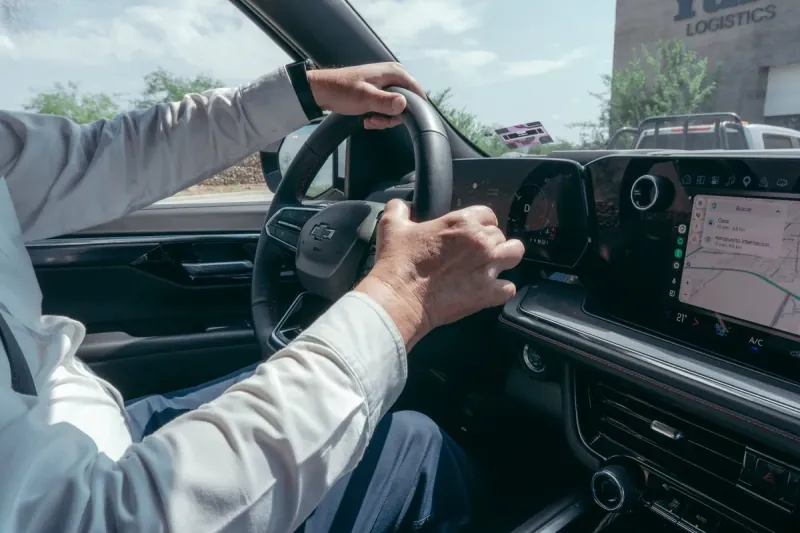
Autonomous Vehicles Make Up 100% Of Global Vehicle Sales.
b66c5d0567b5cd0c · Resolution source: mordorintelligence.com · mordorintelligence.comAutonomous Vehicles Make Up 100% Of Global Vehicle Sales.
Autonomous Vehicles Make Up 100% Of Global Vehicle Sales. Probability: 15%. Confidence Level: Low.
Will Autonomous Vehicles Make Up 100% Of Global Car Sales By 2035?
Autonomous vehicles are expected to transform transportation, but will they completely replace manual cars in the next decade? This article examines the prediction that autonomous vehicles will account for 100% of global new car sales by 2035, and why experts consider this highly unlikely.
What Does 100% Autonomous Sales Mean?
This prediction implies that every new car sold worldwide would be fully self-driving, with no manual driving options available. It would require either a global ban on manual vehicles or a situation where manual cars become economically obsolete. This scenario also demands that all markets, from developed nations to emerging economies, have access to autonomous technology and the necessary regulatory frameworks to enforce its use.
Why Is 100% Adoption By 2035 Considered Unrealistic?
According to industry analysis, several barriers prevent full adoption by 2035. Emerging markets, for instance, will likely continue using manual vehicles for much longer due to cost constraints and insufficient infrastructure. As noted in a 2023 report by the International Transport Forum, the high price of autonomous technology and the need for advanced road systems make it difficult for developing regions to transition quickly. Therefore, a 100% autonomous sales share is viewed as a very long-term possibility, not a near-term reality.
What Are The Key Obstacles To Full Autonomous Vehicle Penetration?
The main obstacles include technological limitations in complex driving environments, high production costs, legal and liability issues, and public acceptance. A study by the RAND Corporation in 2020 highlighted that even in optimistic scenarios, autonomous vehicles would struggle to exceed 50% of new sales by 2050 without major policy shifts. Additionally, manual driving enthusiasts and commercial fleets may resist change, slowing the market transition.
How Do Emerging Markets Affect The Adoption Timeline?
Emerging markets, such as parts of Africa and Southeast Asia, often lack the infrastructure for autonomous vehicles, like reliable GPS and well-marked roads. The World Economic Forum noted in 2022 that these regions might adopt autonomous vehicles only after 2045, if at all. This staggered adoption makes a global 100% target by 2035 nearly impossible, as these markets represent a significant portion of global vehicle sales.
Could Regulatory Mandates Accelerate Full Adoption?
While some countries, like Norway, have proposed bans on new manual car sales by 2025, such policies are rare and not globally coordinated. Even in supportive regulatory environments, the transition to full autonomy is gradual. For example, the European Union's 2023 framework for autonomous vehicles only requires basic safety features, not full autonomy, by 2035. Without a worldwide mandate, achieving 100% autonomous sales remains a distant goal.
Frequently Asked Questions
Q1: What Is The Realistic Market Share For Autonomous Vehicles By 2035?
Most forecasts, such as those from McKinsey & Company, predict that autonomous vehicles will represent between 10% and 30% of new car sales by 2035, depending on regulatory support and consumer adoption rates. This is far from 100%.
Q2: Which Countries Are Leading In Autonomous Vehicle Adoption?
Countries like the United States, China, and Germany are leading in testing and deploying autonomous vehicles. However, even in these nations, full adoption is not expected before 2045 due to legal and infrastructure challenges.
Q3: Will Manual Driving Ever Be Completely Phased Out?
It is possible in the very long term, but not within the next 15 years. The phase-out would require decades of infrastructure investment, legal changes, and a complete shift in consumer behavior. Most experts agree that manual vehicles will coexist with autonomous ones well beyond 2035.
Sources: International Transport Forum (2023), RAND Corporation (2020), World Economic Forum (2022), McKinsey & Company (2021).
Related Predictions
- Hyperloop Becomes A Main Part Of The Global Transport Network. 2035 · Transport
- Electric Aircraft Provide Commercial Service On All Flights. 2035 · Transport
- Widespread Adoption Of Swarm Intelligence-based Traffic Management 2033 · Transport
- Annual Production Of EVs With All-solid-state Batteries Will Exceed 1 Million Units By The End Of 2033. 2033 · Transport
- Hyperloop Becomes Part Of The Global Transport Network. 2030 · Transport