
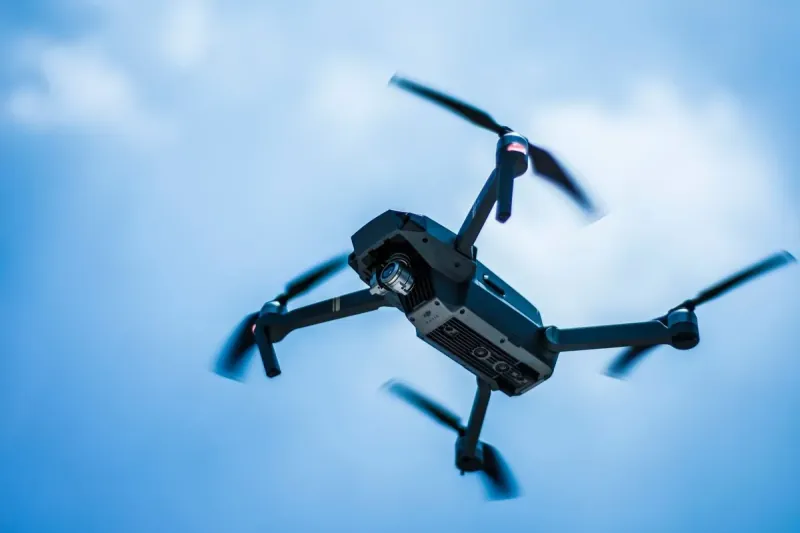
Widespread Adoption Of Drone Delivery In Urban Areas
86a2e6a7d2b3745c · Resolution source: kingsresearch.com · Delivery Drone Market ReportWidespread Adoption Of Drone Delivery In Urban Areas
Widespread Adoption Of Drone Delivery In Urban Areas Probability: 85%. Confidence Level: Medium.
Drone Delivery Will Truly Become Widespread In Urban Areas By 2035?
Sky Messengers: Drone Delivery’s Vision for Urban Areas in 2035
The silhouettes of cities will be redefined not only by architectural structures but also by moving air traffic. The widespread adoption of drone delivery represents a fundamental transformation in the last-mile of transportation. Verifying this prediction will depend on at least one-fifth of the urban population adopting this service in their daily lives and commercial networks operating seamlessly across major cities. 2035 as a target year offers a realistic timeframe for the maturation and social acceptance of this technology.
Full Widespread Adoption Not Expected Before 2030?
Currently, drone delivery presents a limited picture with pilot programs and restricted geographies. Regulations tightly control the flight of unmanned aerial vehicles over residential areas. Sharing airspace with existing passenger and cargo aircraft necessitates autonomous collision avoidance systems to minimize security risks. Furthermore, concerns regarding noise pollution and data protection are key issues that companies and local governments address with sensitivity. Therefore, expectations of full widespread adoption before 2030 remain optimistic due to the still-unready technological and legal infrastructure.
What Developments Will Accelerate Drone Delivery Towards 2035?
However, this picture will change by 2035. With increased technological maturity, extended battery life, and advancements in autonomous navigation software, cost-effectiveness will rise. Landing stations and cargo terminals integrated into urban vertical infrastructure will form the backbone of operational networks. Artificial intelligence-supported central systems for airspace management will coordinate the simultaneous and safe movement of thousands of drones. Challenges will be addressed across a broad spectrum, including cybersecurity to international standards for air traffic control. These developments are the key elements that make the 2035 target realistic.
Frequently Asked Questions
Which Regulations Need To Change For Drone Delivery?
Current regulations restrict flights over residential areas. By 2035, comprehensive legal frameworks need to be established for airspace management, autonomous flight permissions, and safety standards. International harmonization is particularly crucial regarding collision avoidance systems and data privacy.
What Concerns Need To Be Addressed For The Social Acceptance Of Drone Delivery?
Noise pollution, personal data protection, and security risks are the most significant concerns. Transparent data policies, quiet motor technologies, and collaboration with local communities will increase acceptance. Furthermore, clarifying emergency response drone intervention protocols will reinforce trust.
How Will The Rate Of Widespread Adoption Of Drone Delivery In 2035 Be Measured?
The validation criteria is that at least 20% of the urban population regularly receives packages via drone or that commercial networks operate seamlessly within major cities. This can be tracked through surveys, operator data, and city management reports. Daily delivery numbers and geographical scope will also be used as measurements.
Related Predictions
- AI-driven Logistics Optimization Will Achieve A 50% Efficiency Increase. 2035 · Transport
- Hyperloop Becomes A Main Part Of The Global Transport Network. 2035 · Transport
- Electric Aircraft Provide Commercial Service On All Flights. 2035 · Transport
- Autonomous Vehicles Make Up 100% Of Global Vehicle Sales. 2035 · Transport
- Widespread Adoption Of Swarm Intelligence-based Traffic Management 2033 · Transport