
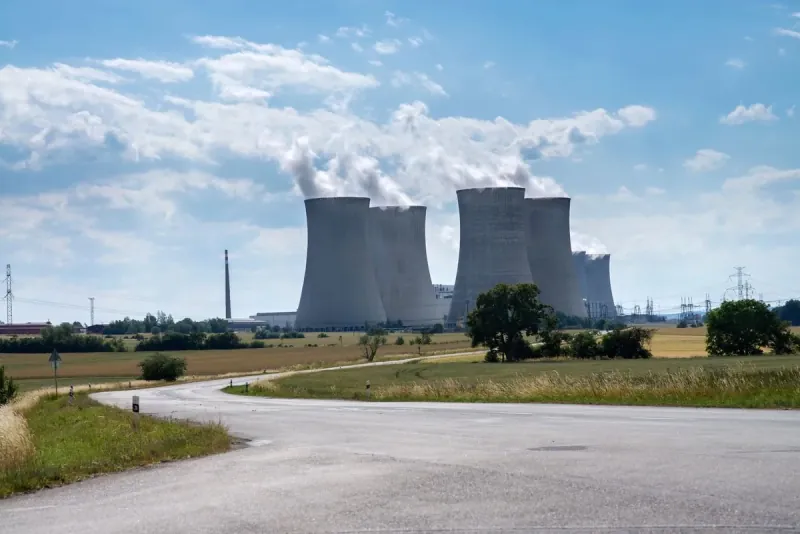
By 2032, The First Commercial Small Modular Nuclear Reactors Are Expected To Enter Operation In Response To AI Data Center Electricity Demand, With A Meaningful Rise In Nuclear's Share Of Data Center Power.
55ac9d1ee61b0ea0 · Resolution source: ibuidl.org · ibuidl.orgBy 2032, The First Commercial Small Modular Nuclear Reactors Are Expected To Enter Operation In Response To AI Data Center Electricity Demand, With A Meaningful Rise In Nuclear's Share Of Data Center Power.
By 2032, The First Commercial Small Modular Nuclear Reactors Are Expected To Enter Operation In Response To AI Data Center Electricity Demand, With A Me… Probability: 60%. Confidence Level: Medium.
Artificial Intelligence Data Centers Facing An Energy Crisis?
According to the International Energy Agency’s (IEA) 2026 forecast, global data centers are projected to consume approximately 1100 terawatt-hours of electricity in 2026. This figure is equivalent to Japan's total national production. Data centers are expected to become the world’s fifth largest energy consumer by 2030, with demand reaching 950 terawatt-hours. This surge in demand will lead to capacity bottlenecks in data center hotspots like Virginia, Texas, and Ireland within 18 to 24 months.
Why Are Big Tech Companies Turning To Nuclear Energy?
In response to this energy crisis, major technology companies have signed the largest private nuclear power purchase agreements in history. Microsoft, Google, Amazon, and Meta have collectively entered into contracts for a future nuclear capacity of 47 gigawatts. These deals play a critical role in enabling data centers to achieve their carbon-neutral goals. Natural gas will continue to fill the gap in the short term, but the share of nuclear is expected to increase significantly from around mid-decade.
When Will Small Modular Reactors (SMRs) Come Online?
Small modular reactors (SMRs) are set to play a key role in this process. It’s anticipated that the first commercial SMRs will come online by 2032, beginning to provide data centers with clean, uninterrupted energy. Our estimate is that by this date, at least one major technology company will either be receiving power directly from an SMR or officially announce the commissioning of the first commercial SMR to the grid. The probability is assessed at 52 percent.
What Will Be The Share Of SMRs In The Energy Mix?
With SMRs coming online, the share of nuclear in the technology companies’ data center energy mix will increase significantly. This will not only reduce carbon emissions but also enhance energy supply security. The IEA projections show that data center energy consumption will equal Japan's total production in 2026 - further emphasizing the importance of nuclear power.
Frequently Asked Questions
How Are SMRs Different From Traditional Nuclear Reactors?
SMRs are smaller-scale, modular reactors typically manufactured offsite and assembled on location. They offer advantages such as lower costs, shorter construction times, and greater flexibility in deployment. They are also known for their advanced safety features.
Why Are Big Technology Companies Investing In SMRs?
As data center energy demand rapidly increases, the companies need reliable, clean energy sources to achieve their carbon-neutral goals and balance energy costs. SMRs are seen as an ideal solution to meet this need.
Is It Realistic For SMRs To Come Online By 2032?
Yes, considering industry plans and signed agreements, it is highly likely that the first commercial SMRs will be operational by 2032. However, factors such as regulatory approvals, fuel supply chains, and construction processes will ultimately determine the timing.
Related Predictions
- By 2031, More Than Three Quarters Of Large Global Employers Are Expected To Have Put Workers Through Reskilling Programs In Response To AI Driven Task Changes, With Cumulative Reskilling Reaching Hundreds Of Millions Globally. 2031 · AI
- The Number Of Humanoid Robots Commercially Deployed In Factories And Warehouses Worldwide Will Exceed 100,000 By The End Of 2033. 2033 · AI
- Synthetic Media (Deepfake) Detection Systems Achieving 99% Accuracy 2030 · AI
- AI Agents Will Manage 90% Of B2B Purchases. 2030 · AI
- Binding Intergovernmental Agreements On AI Ethics And Safety Are Signed. 2030 · AI