
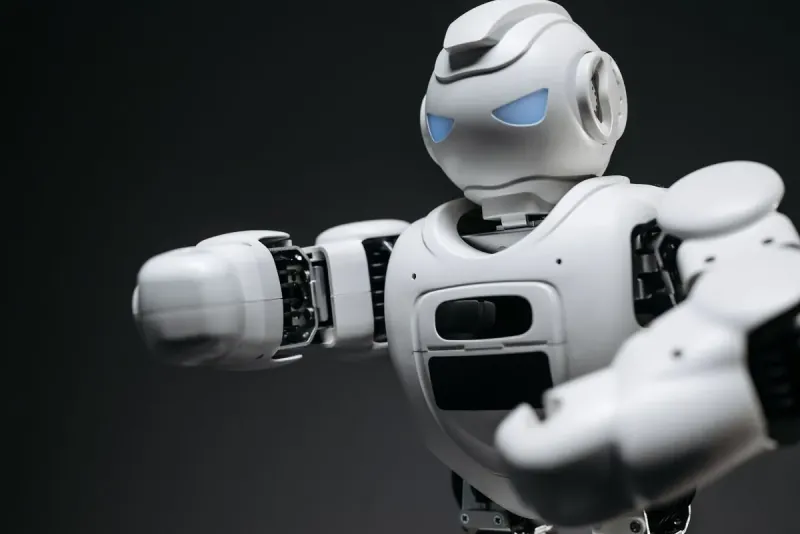
The Number Of Humanoid Robots Commercially Deployed In Factories And Warehouses Worldwide Will Exceed 100,000 By The End Of 2033.
76dd9eafcc65cb5b · Resolution source: iiot-world.com · Tesla Optimus in manufacturing: 2026 dataThe Number Of Humanoid Robots Commercially Deployed In Factories And Warehouses Worldwide Will Exceed 100,000 By The End Of 2033.
The Number Of Humanoid Robots Commercially Deployed In Factories And Warehouses Worldwide Will Exceed 100,000 By The End Of 2033. Probability: 48%. Confidence Level: Low.
Will There Be 100,000 Humanoid Robots In Factories By 2033?
According to a market prediction, the global deployment of humanoid robots in factories and warehouses will exceed 100,000 units by the end of 2033. The probability is estimated at 48%. This forecast is based on current deployments at Tesla, Figure, and Apptronik, as well as aggressive scaling targets from major manufacturers.
What Is The Current State Of Humanoid Robots In 2026?
By mid-2026, humanoid robots have entered real factory environments, but in limited numbers. Tesla operates over 1,000 Optimus units at Fremont and Giga Texas. Figure's robots have logged over 1,250 operational hours at BMW Spartanburg. Apptronik's Apollo robots carry assembly kits at Mercedes-Benz Berlin. However, an analysis from July 2026 shows that no manufacturer has scaled beyond a few hundred units in sustainable commercial settings.
What Are The Key Scaling Targets For Robot Manufacturers?
Tesla aims to produce 1 million robots per year at Fremont, with prices targeted at $20,000 to $30,000. Figure plans to deploy over 10,000 units. Goldman Sachs projects the humanoid robot market will reach $38 billion by 2035. Chinese manufacturers like Unitree are entering with low-cost models priced between $13,500 and $16,000. These targets support the possibility of reaching 100,000 units by 2033.
What Are The Main Risks To Reaching 100,000 Units?
The primary risk is execution. Tesla missed its 2025 internal target of 5,000 units by over 90%, producing only a few hundred. Dexterity and reliability issues remain unresolved. General-purpose humanoid robots are still limited to narrow tasks. The 100,000 figure assumes that Tesla's production goals will largely materialize, which is uncertain based on historical performance.
How Does The 2026 Deployment Compare To Historical Robot Adoption?
In 2026, the installed base is estimated at a few thousand units. Reaching 100,000 by 2033 requires a compound annual growth rate of roughly 70% to 80%. This is aggressive but not unprecedented in industrial automation. For comparison, collaborative robots took over a decade to reach similar scale. The difference is that humanoid robots have multiple large manufacturers with significant capital backing.
What Would Happen If This Prediction Comes True?
If 100,000 humanoid robots are deployed by 2033, manufacturing and logistics labor structures will begin to transform. Humanoid robots would shift from a niche experiment to a mainstream industrial category. This would affect labor markets, factory design, and supply chains. The economic impact would likely exceed the direct robot sales, as companies redesign processes around humanoid capabilities.
What Is The Role Of Chinese Manufacturers In This Forecast?
Chinese manufacturers like Unitree are critical to the forecast. Their low-cost models, priced at $13,500 to $16,000, could accelerate adoption in price-sensitive markets. However, data on their commercial deployments in factories and warehouses remains scarce. The forecast of 100,000 units depends on both Western and Chinese manufacturers achieving their stated production and deployment targets.
How Reliable Are The Sources For This Prediction?
The prediction relies on company announcements, analyst reports, and operational data from 2026. Specific sources include Tesla's production statements, Figure's operational hours at BMW, and Goldman Sachs market projections. Independent verification of these numbers is limited. The 48% probability reflects this uncertainty, balancing strong scaling ambitions against historical execution failures.
Frequently Asked Questions
What Is The Main Obstacle To Reaching 100,000 Humanoid Robots By 2033?
The main obstacle is manufacturing reliability and cost reduction. As of 2026, no manufacturer has proven they can produce humanoid robots at scale with consistent quality. Tesla's miss of its 2025 target by over 90% highlights this challenge. Dexterity in complex tasks and long-term operational stability remain unproven at scale.
Which Companies Are Leading The Humanoid Robot Deployment In Factories?
Tesla leads with over 1,000 Optimus units at its own facilities. Figure has robots at BMW Spartanburg with over 1,250 operational hours. Apptronik deploys Apollo robots at Mercedes-Benz Berlin. Chinese manufacturers like Unitree are entering with lower-cost models, though their factory deployments are less documented.
How Does The 2033 Forecast Compare To Other Market Projections?
Goldman Sachs projects the humanoid robot market to reach $38 billion by 2035. The 100,000 unit forecast for 2033 is more conservative than Tesla's stated goal of 1 million units per year. However, it is more aggressive than historical adoption rates for industrial robots. The 48% probability reflects a balanced view between these extremes.
Related Predictions
- Task-specific AI Agents Will Generate At Least A Quarter Of Global Enterprise Application Software Revenue. 2034 · AI
- Global Installed Power Demand From AI Data Centers Will Exceed 100 Gigawatts By 2030. 2030 · AI
- Physical AI (Robotic) Systems Will Dominate The Entire Logistics Sector 2038 · AI
- AI-assisted Scientists Discover New Materials And Drug Candidates. 2028 · AI
- Common Global Standards For AI Ethics And Governance Are Established. 2028 · AI