
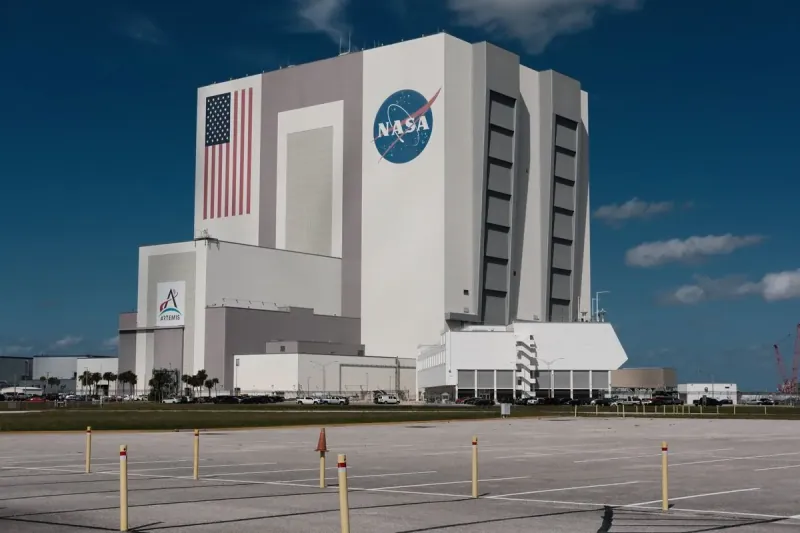
By 2037, Opening Of The First International Research Base On The Moon.
2999940f3a7464e5 · Resolution source: bbc.com · US Back on the Moon After 52 YearsPrediction Details
By 2037, Opening Of The First International Research Base On The Moon. Probability: 35%. Confidence Level: Low.
Could An International Research Base On The Moon Become Reality By 2037?
The moon is seen as humanity’s next step towards permanent presence in space. The establishment of a staffed and permanent research base, operated jointly by multiple countries by 2037, is ambitious but not entirely impossible given current technological advancements and international collaboration dynamics. The realization of this forecast depends not only on engineering success but also on political will and the sustainability of financial resources.
Current Status: What Are The Plans And Projects?
Currently, there is no permanent base on the lunar surface. NASA’s Artemis program, spearheaded by NASA, aims for crewed landings in the mid-2020s, although these missions will be short-duration exploration and technology validation exercises. Meanwhile, China and Russia's International Lunar Research Station (ILRS) project plans a foundational phase by the early 2030s and full-scale operation by the late 2030s. The European Space Agency and Japan are also in discussions to integrate their modules or logistical support into these formations. However, to date, no country has officially announced the establishment of a facility on the lunar surface that continuously houses humans.
What Technological Barriers Need To Be Overcome?
Several critical technological and operational barriers need to be overcome for this forecast to materialize.
How Will Energy And Heat Management Be Provided?
The moon’s nighttime temperatures drop to -170 degrees Celsius during 14-day periods of darkness, making energy production and heat management crucial. Nuclear power systems or advanced battery technologies could offer a solution, but these systems have not yet undergone long-term reliability testing in space.
Are Life Support Systems Sufficient?
Life support systems need to provide closed-loop recycling of water, oxygen, and food. Experience on the International Space Station provides guidance, although the toxic effects of lunar regolith and low gravity (one sixth of Earth’s) create additional challenges. Human factors such as radiation protection and psychological resilience must also be considered.
Is International Collaboration And Funding Possible?
The 2037 target aligns with the timelines of programs like Artemis and ILRS, but the cost for a fully operational base could run into the billions of dollars. Budget priorities of nations and geopolitical tensions could threaten the sustainability of collaboration. However, shared interests such as scientific discovery and resource utilization (e.g., water ice) could bring countries together.
In conclusion, the probability of an international lunar base being established by 2037 is around 35 percent. This figure may increase or decrease depending on the acceleration of technological advancements and the strengthening of political will.
Frequently Asked Questions
Which Countries Are Collaborating On A Lunar Base?
Currently, the most concrete collaboration is led by China and Russia within the ILRS project. NASA’s Artemis program includes international partners (Europe, Japan, Canada) spearheaded by the United States. It is likely that these two separate formations will merge or establish parallel bases in 2037.
What Is The Biggest Challenge Of Establishing A Permanent Base On The Moon?
The biggest challenge is providing energy for the 14-day night and reliably operating closed-loop life support systems. Cost and international coordination are also critical factors.
What Would Be The First Task If A Base Were Opened In 2037?
The initial task would be to research water ice and mineral resources on the lunar surface, examine the effects of long-term human habitation, and conduct technology tests for future missions to Mars.
Related Predictions
- By 2037, Construction Of Structures In Space Using 3D Printing. 2037 · Space
- By 2037, Space Tourism Reaches 100,000+ People Annually. 2037 · Space
- By 2037, The First Crewed Mars Landing Occurs (SpaceX Or An International Mission). 2037 · Space
- By 2038, more than 100 countries will have signed the Artemis Accords. 2038 · Space
- By 2036, Space Tourism Reaching More Than 10,000 Customers Per Year. 2036 · Space