
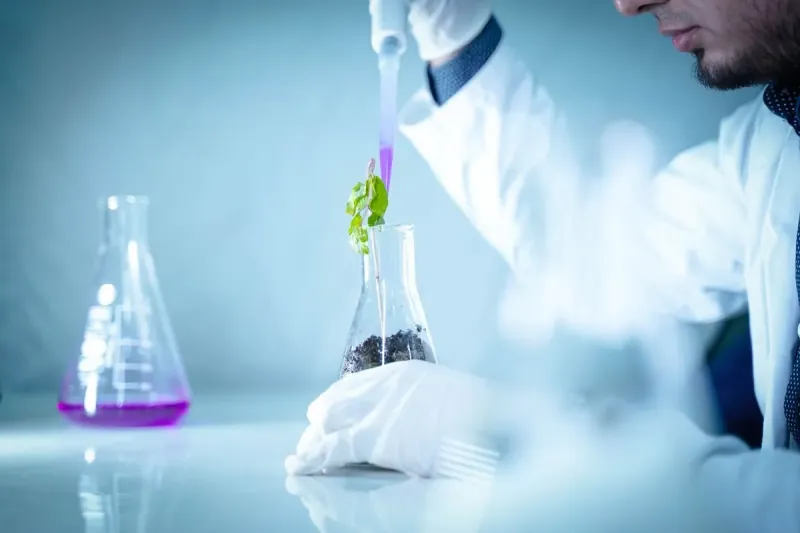
Organoids Completely Replace Animal Testing In Drug Trials
4aa482e6ee5b4637 · Resolution source: vespernews.com · What are organoids and drug testingOrganoids Completely Replace Animal Testing In Drug Trials
Organoids Completely Replace Animal Testing In Drug Trials Probability: 25%. Confidence Level: Low.
Can Organoids Completely Replace Animal Testing In Drug Trials?
Organoids are structures derived from stem cells and which create three-dimensional models of human organs at a microscale. This technology, a breakthrough in biomedical research over the past decade, has the potential to revolutionize drug development processes. Could organoid-based tests replace animal experiments entirely by 2035? This question must be addressed within the context of the current situation, encountered challenges and potential impacts.
Why Are Animal Experiments Still Considered Mandatory In Current Drug Approval Processes?
Almost all current drug approval processes rely on animal models - such as mice, rats, and primates - to obtain data on safety and efficacy. Millions of animals are used globally each year for this purpose, but due to interspecies physiological differences, significant failures occur when translating results to humans. It is known that approximately 90% of candidate molecules passing clinical trials are eliminated because they are ineffective or toxic in humans. Organoids, being produced from human cells, represent a radical solution to this problem. Specifically, liver, kidney and brain organoids show promising results in drug metabolism and neurotoxicity tests.
What Is The Potential For Organoids To Replace Animal Experiments?
The idea that organoids can completely replace animal experiments is based on strong scientific grounds. Their fidelity to human genetics and cellular microenvironment opens doors to personalized medicine applications. Furthermore, concerns about animal welfare and ethical considerations are creating a pressure factor accelerating this transformation. However, there are significant barriers to overcome for complete replacement. Primarily, the limited capacity of organoids to mimic complex systemic responses such as vascularization (blood vessel formation) and immune system interactions. It is currently impossible to model an effect on the entire body, especially inter-organ interactions and long-term toxicity.
What Barriers Need To Be Overcome For Organoid Acceptance By 2035?
Despite the rapid development of organoid technology, biological complexity, standardization and regulation barriers have yet to be overcome for complete replacement. Biological Complexity: Organoids do not fully reflect the structural and functional diversity of real organs. Standardization: There are inconsistencies between organoids produced in different laboratories; this negatively affects the repeatability and reliability of results. Regulation: Drug approval authorities (such as FDA, EMA) have not yet developed guidelines to formally accept organoid data in approval processes. Therefore, the probability of abolishing animal experiments by 2035 and officially accepting organoid-based tests is at 25%. Despite this low probability, intensive research continues to aim for organoids to completely transform animal experiments in drug development processes.
What Are The Potential Impacts Of The Widespread Use Of Organoids?
The widespread use of organoids in drug testing will create significant impacts from both a scientific and ethical perspective. Thanks to models more suitable for human biology, success rates of drugs may increase, development costs could decrease, and animal usage would be reduced. Furthermore, personalized treatment approaches using patient-specific organoids will strengthen. However, the realization of this transformation requires interdisciplinary collaboration and active participation of regulatory authorities.
Frequently Asked Questions
Can Organoids Replace Animal Experiments?
Organoids, being produced from human cells, can eliminate problems stemming from species differences. However, solving biological complexities such as vascularization, immune interactions and systemic responses modeling is required for complete replacement. It is not expected that they will completely replace animal experiments at the moment.
Will Animal Experiments Be Mandatory In Drug Approvals By 2035?
Probably yes, but acceptance of organoids as complementary tests may be considered. Due to current regulations and lack of standardization, more time is needed to abolish animal experiment requirements.
What Are The Advantages Of Using Organoids In Drug Testing?
Organoids provide more reliable data because they are faithful to human genetics and cellular microenvironment. They enable personalized medicine applications, reduce animal usage and can save costs and time in drug development processes.
Related Predictions
- Neural Prostheses Will Restore Natural Movement Abilities To Paralyzed Patients. 2035 · Biotech
- Bioelectronic Implants Will Be Widely Used To Manage Chronic Diseases. 2035 · Biotech
- Synthetic Meat Becomes 30% Cheaper Than Conventional Meat 2035 · Biotech
- Bioprinters Routinely Produce Simple Organs (Skin, Cartilage) 2035 · Biotech
- Reduction Of Dependence On Traditional Agriculture By 50% Through Precision Fermentation 2035 · Biotech