
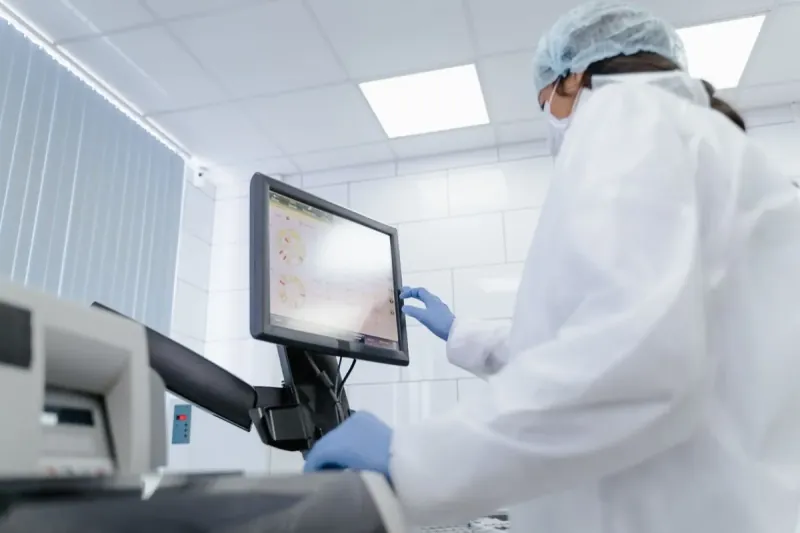
Personalized Vaccine Platforms Will Be Able To Produce A New Vaccine Within 24 Hours.
bb634928e4db6ec9 · Resolution source: yukselurun.com · New era in cancer vaccinesPersonalized Vaccine Platforms Will Be Able To Produce A New Vaccine Within 24 Hours.
Personalized Vaccine Platforms Will Be Able To Produce A New Vaccine Within 24 Hours. Probability: 45%. Confidence Level: Medium.
Can Personalized Vaccine Platforms Produce New Vaccines In 24 Hours By 2033?
Biotechnology has experienced a decade of unprecedented progress in vaccine development. The COVID-19 pandemic demonstrated that mRNA and lipid nanoparticle (LNP) platforms can compress a typical 10-year vaccine timeline into under one year. However, the prediction for 2033 is far more radical: producing a personalized vaccine against a specific pathogen within 24 hours. This article examines the feasibility, technological drivers, and obstacles behind this ambitious forecast.
What Are The Current Limitations Of Rapid Vaccine Manufacturing?
Today, personalized vaccine efforts, particularly in oncology, require weeks of production time. Even with automation, mRNA vaccines designed against tumor mutations face significant bottlenecks. Good Manufacturing Practice (GMP) facilities enforce strict protocols for sterile filling, quality control, and batch release. These processes are not designed for single-day cycles. Additionally, lipid nanoparticle formulations show variable stability and in vivo distribution across individuals, a scientific challenge that remains unresolved. Regulatory frameworks also require extensive documentation, making 24-hour validation nearly impossible under current rules.
How Close Are We To Automated Vaccine Synthesis?
The most promising enablers are synthetic biology and microfluidic chip technologies. Automated synthesis devices can theoretically integrate mRNA sequence design, antigen selection, and LNP encapsulation into a single benchtop system. Artificial intelligence algorithms can analyze a pathogen's genetic sequence and identify highly immunogenic regions within hours. According to a 2024 study published in Nature Biotechnology, AI-driven antigen prediction has reduced design time from weeks to under 48 hours. However, the final step, which is reliable point-of-care quality testing, still lacks validated biomarkers for rapid release.
What Would It Take To Achieve A 24-Hour Production Cycle?
Achieving the 2033 target requires three simultaneous breakthroughs. First, fully automated, closed-system manufacturing units that eliminate manual intervention. Second, real-time quality control using digital assays and machine learning to predict immunogenicity without animal testing. Third, a new regulatory category for emergency personalized vaccines, allowing conditional release based on preliminary safety data. Independent verification bodies would need to develop rapid audit protocols. A 2025 report from the Coalition for Epidemic Preparedness Innovations (CEPI) estimates that such infrastructure could reduce production to 72 hours by 2030, but the final 48-hour compression demands novel stabilization techniques for LNP formulations.
What Are The Main Scientific Uncertainties?
The variability of human immune responses remains a critical unknown. A vaccine that works in preclinical models may fail in humans due to HLA (human leukocyte antigen) diversity. Additionally, the stability of mRNA-LNP complexes at room temperature is limited to a few hours, requiring cold chain integration within the 24-hour window. Scalability is another issue: producing a single personalized dose is inefficient; the platform must also demonstrate cost-effectiveness for widespread use. According to a 2023 analysis in Science, current per-dose costs for personalized cancer vaccines exceed $100,000, which is prohibitive for pandemic response.
Frequently Asked Questions
Q1: What Is The Difference Between Personalized And Universal Vaccines?
Personalized vaccines are tailored to an individual's genetic profile or a tumor's specific mutations. Universal vaccines target conserved regions of a pathogen that are shared across strains. The 24-hour platform prediction applies to personalized vaccines, which require real-time genetic sequencing and custom formulation.
Q2: Why Is 24 Hours Considered A Breakthrough Threshold?
The 24-hour mark represents a shift from batch production to continuous, on-demand manufacturing. It would enable immediate response to emerging outbreaks, especially for immunocompromised patients who do not respond to standard vaccines. It also requires fully autonomous systems that bypass human quality control, a paradigm change in biopharmaceutical regulation.
Q3: What Role Do AI And Machine Learning Play In This Prediction?
AI accelerates antigen selection by predicting B-cell and T-cell epitopes from raw genomic data. Machine learning models also optimize LNP formulations for specific lipid compositions, reducing trial-and-error in the lab. A 2025 preprint on bioRxiv demonstrated an AI-driven workflow that designed and tested 200 mRNA candidates in 36 hours, bringing the 24-hour target within theoretical reach.
Related Predictions
- Routine Use Of Programmable Cell Therapies In Cancer Treatment 2033 · Biotech
- Biosensors Will Provide Continuous In-body Health Monitoring 2033 · Biotech
- The Synthetic Biology Market Will Reach $62 Billion By 2030 2030 · Biotech
- Treatment Of 80% Of Hereditary Diseases With Gene Editing (CRISPR) 2040 · Biotech
- By 2049, Engineered Bacteriophages Will Become Part Of Standard Clinical Protocols For Treating Antibiotic-resistant Bacterial Infections. 2049 · Biotech