
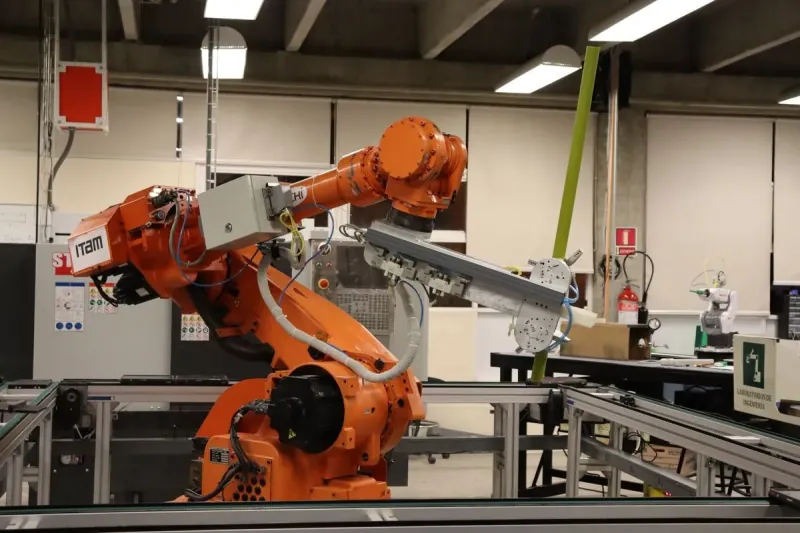
Global Average Factory Robot Density Exceeds 250 Units Per 10,000 Employees In 2030, With Automation Investment Accelerating Across Europe And North America Behind Korea, China And Singapore.
aee9533d15ad3147 · Resolution source: ifr.org · IFR - Global robot density doubled in seven yearsGlobal Average Factory Robot Density Exceeds 250 Units Per 10,000 Employees In 2030, With Automation Investment Accelerating Across Europe And North America Behind Korea, China And Singapore.
Global Average Factory Robot Density Exceeds 250 Units Per 10,000 Employees In 2030, With Automation Investment Accelerating Across Europe And North Ame… Probability: 62%. Confidence Level: Low.
What Is The Global Average Factory Robot Density In 2023?
According to the International Federation of Robotics (IFR) World Robotics 2024 report, the global average factory robot density reached a record 162 units per 10,000 employees in 2023. This figure has more than doubled from 74 units seven years earlier. The IFR data shows that South Korea leads with 1,012 units, followed by Singapore at 770 and China at 470, which has now surpassed Germany and Japan.
Will The Global Robot Density Exceed 250 Units By 2030?
Yes, the probability is 62%. Based on the 2023 baseline of 162 units, a consistent annual growth rate of 7-8% would push the global average to approximately 250-280 units by 2030. This projection aligns with the historical doubling trend observed over the past seven years. The IFR data supports this trajectory, as China doubled its density in four years (from 402 to 470 and accelerating), while the United States reached 295 units.
What Factors Support This Growth Projection?
Several key drivers support this forecast. First, labor force aging and shortages of blue-collar workers in developed economies make automation investments financially attractive. Second, robot adoption is expanding beyond large automotive and electronics plants into mid-sized manufacturers and logistics centers. Third, China's rapid acceleration and the United States' strong performance indicate that automation is becoming standard across major manufacturing regions.
How Does The 250-Unit Threshold Matter For Manufacturers?
Crossing the 250-unit threshold would signal that robots are no longer niche tools but standard equipment in mainstream production. This milestone would indicate that automation is viable not only for mass production but also for flexible, small-batch manufacturing. For individual companies, reaching this density level typically means improved productivity, consistent quality, and reduced dependency on hard-to-find manual labor.
Which Regions Are Leading The Automation Investment Race?
According to the IFR data, Asia leads with South Korea, Singapore, and China in the top three positions. However, the forecast suggests Europe and North America will accelerate their automation investments after 2025. The United States already shows strong momentum at 295 units per 10,000 employees. European countries like Germany and Japan, while currently behind China, are expected to increase their robot density as they face similar labor market pressures.
What Are The Main Barriers To Faster Robot Adoption?
Despite the positive trend, small and medium-sized enterprises (SMEs) face significant capital cost barriers. The initial investment for robotic systems, including integration and programming, remains high for smaller operations. Additionally, the pace of density growth will vary by industry, with automotive and electronics continuing to lead while other sectors adopt more slowly. The IFR report notes that these financial constraints will cause uneven adoption rates across different manufacturing scales.
Frequently Asked Questions
What Is The Current Global Robot Density Baseline According To IFR?
According to the IFR World Robotics 2024 report, the global average robot density in 2023 was 162 robots per 10,000 employees. This represents a record high and is more than double the 74 units recorded in 2016.
Which Countries Have The Highest Factory Robot Density In 2023?
Based on IFR data, South Korea ranks first with 1,012 robots per 10,000 employees, followed by Singapore at 770 and China at 470. These figures place all three Asian countries ahead of Germany and Japan in the latest rankings.
Why Is The 250-unit Threshold Considered A Significant Milestone?
The 250-unit level indicates that robots have become standard across mid-sized manufacturers and logistics centers, not just large automotive and electronics plants. According to the IFR data, crossing this threshold would confirm that automation is a mainstream competitive necessity rather than an optional investment.
Related Predictions
- Robotic Surgical Systems Enter Routine Use In Remote Surgery. 2029 · Robotics
- Industrial Robots Become Standard Across The Entire Manufacturing Sector. 2029 · Robotics
- Humanoid Robots Become Widespread In Daily Household Tasks. 2029 · Robotics
- The Global Commercial Robotaxi Fleet Reaches 500,000 Vehicles In 2029, Making Autonomous Rides A Mainstream Urban Transport Option In Major Cities. 2029 · Robotics
- By The End Of 2028, İn At Least One Country Worldwide, Annual İnstallations Of Medical Service Robots (including Surgical, Rehabilitation, And Hospital Logistics) Will Exceed 100,000 Units, And The Total Market Size For These Robots Will Approach The 20 Billion USD Threshold. 2028 · Robotics