
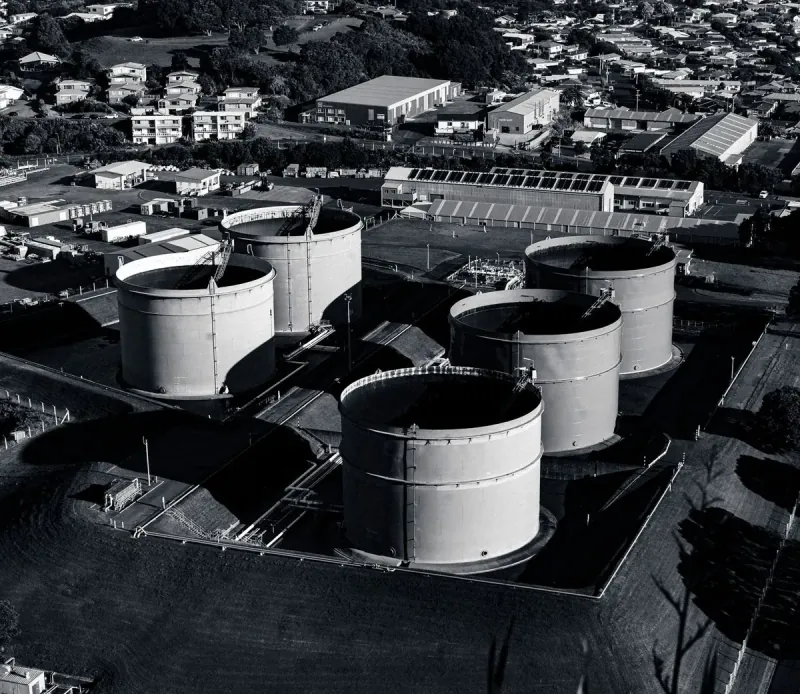
The First Large-scale Green Hydrogen Plants Come Online For The Hydrogen Economy.
b8841a05b93b2ebf · Resolution source: omv.com · omv.comThe First Large-scale Green Hydrogen Plants Come Online For The Hydrogen Economy.
The First Large-scale Green Hydrogen Plants Come Online For The Hydrogen Economy. Probability: 58%. Confidence Level: Medium.
What Are The First Large-Scale Green Hydrogen Plants?
Green hydrogen is produced by splitting water into hydrogen and oxygen using renewable electricity. This process, called electrolysis, is seen as critical for decarbonizing heavy industry, refineries, and long-distance transport. Large-scale green hydrogen plants refer to industrial electrolyzer facilities with capacities in the tens to hundreds of megawatts. The first of these are currently under construction or in advanced planning stages.
When Will The First Large-Scale Green Hydrogen Plants Start Operating?
The target year is 2027. According to the International Energy Agency (IEA), global electrolyzer capacity is growing rapidly, but most projects are still small. The first truly large-scale plants, such as the one being built by OMV in Austria, are expected to come online around 2027. OMV's plant is designed to be one of Europe's largest electrolysis facilities, producing green hydrogen for refinery use.
Why Is 2027 A Realistic Timeline For Green Hydrogen Scale-Up?
The timeline is supported by concrete project announcements. For example, OMV's project in Schwechat, Austria, is scheduled to start operations in 2027. The IEA's Global Hydrogen Review 2024 notes that if all announced projects are completed, global electrolyzer capacity could reach 50 GW by 2030, with the first major tranche coming online between 2026 and 2028. The 2027 date aligns with typical construction lead times for large chemical plants, which take 3 to 5 years from final investment decision.
What Are The Main Barriers To Achieving This 2027 Target?
Two main barriers exist. First, electrolyzer costs remain high, though they have fallen by 40% since 2019, according to the IEA. Second, renewable electricity prices must be low enough to make green hydrogen competitive with fossil-based hydrogen. The IEA projects that cost parity could be reached in some regions by 2030, but not by 2027. However, subsidies and carbon pricing mechanisms in the European Union and the United States are helping bridge this gap.
How Does This Fit Into The Broader Hydrogen Economy?
The 2027 plants are not the end goal, they are the starting point. Once these facilities operate, they will provide real-world data on electrolyzer performance, grid integration, and hydrogen storage. This will de-risk future investments. The Hydrogen Council estimates that by 2030, the cost of green hydrogen could fall by up to 60% if deployment scales as expected. The 2027 facilities are thus a proof of concept for the entire hydrogen economy.
Frequently Asked Questions
What Is The Difference Between Green, Blue, And Grey Hydrogen?
Green hydrogen is made via electrolysis using renewable energy. Blue hydrogen is made from natural gas with carbon capture and storage. Grey hydrogen is made from natural gas without carbon capture. Green hydrogen has the lowest carbon footprint but is currently the most expensive.
Which Companies Are Building The First Large-scale Green Hydrogen Plants?
OMV in Austria is a prominent example. Other companies include Shell in the Netherlands, Air Products in Saudi Arabia, and Fortescue in Australia. The IEA tracks over 1,000 announced projects globally, but only a handful have reached final investment decision.
Will Green Hydrogen Replace Batteries For Energy Storage?
No. Batteries are better for short-term storage (hours to days). Green hydrogen is better for seasonal storage (weeks to months) and for industrial processes that need high-temperature heat. Both technologies are complementary, not competitive. The 2027 plants will focus on industrial use, not grid storage.
Sources: International Energy Agency (IEA), Global Hydrogen Review 2024; OMV corporate announcements; Hydrogen Council reports.
Related Predictions
- Carbon Capture Facilities Begin Storing CO2 At The Million-tonne Scale. 2027 · Climate
- Global Renewable Capacity Exceeds 5 TW; Solar And Wind Become The Cheapest Power Sources. 2027 · Climate
- Global Energy-related CO2 Emissions Will NOT Set A New Record In 2027 Compared To The Previous Year, Despite Rising Data Center / AI Demand. 2027 · Climate
- By December 2027, No Official Body Such As WMO Or Copernicus Will OFFICIALLY DECLARE That The Paris Agreement's 1.5°C LONG-TERM (20-30 Year Average) Threshold Has Been Exceeded. 2027 · Climate
- Global Carbon Capture And Storage (CCS) Capacity Will NOT Exceed The 100 Million Tonnes/year Threshold By The End Of 2027. 2027 · Climate