
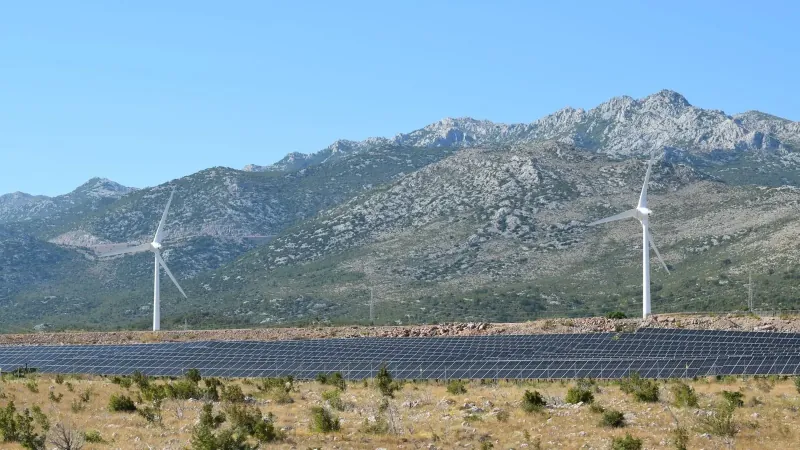
Solar And Wind Combined Will Supply More Than 40% Of Global Electricity Generation.
553dd6a3085f66b3 · Resolution source: ember-energy.org · Global Electricity Review 2026Solar And Wind Combined Will Supply More Than 40% Of Global Electricity Generation.
Solar And Wind Combined Will Supply More Than 40% Of Global Electricity Generation. Probability: 58%. Confidence Level: Medium.
Could Solar And Wind Energy Meet 40% Of Global Electricity By 2034?
Renewable energy reached a historic milestone in 2025. According to Ember data, renewables provided 33.8% of global electricity generation for the first time, surpassing coal (33%). Solar energy alone met 75% of the net demand growth in 2025, increasing its production by 636 TWh to reach 2,778 TWh. Solar is doubling roughly every three years and overtook wind for the first time in 2025. Can this momentum push the combined share of solar and wind above 40% by 2034?
What Are The Current Trends And Projections?
IEA projections predict that the share of variable renewables (solar + wind) will rise from 17% in 2025 to 27% by 2030. If an average of over 600 TWh is added annually in solar, reaching the 40% threshold by 2034 seems realistic. Battery storage costs have fallen for two consecutive years, and the capacity installed in 2025 reached a level capable of shifting 14% of new solar production from daytime to other hours. This is increasingly eroding the barrier of intermittency.
Counterarguments: Are Grids And Flexibility Sufficient?
High renewable shares require massive transmission lines and long-duration storage investments that most grids currently lack. Furthermore, permitting processes and supply chain bottlenecks in regions outside of China could slow growth. However, the cost curve is overwhelmingly in favor of renewables. Solar and wind are now the cheapest sources of new electricity in most markets.
Probability and Conclusion for 2034
According to forecasts, the probability of solar and wind combined meeting more than 40% of global electricity generation is estimated at 58%. If this threshold is crossed, fossil fuels will enter a period of structural and irreversible decline in the global electricity mix. Annual reports from Ember or the IEA will provide this verification.
Frequently Asked Questions
1. How Much Of Global Electricity Did Solar And Wind Energy Provide In 2025?
In 2025, solar and wind together met approximately 17% of global electricity generation. However, all renewable sources (including hydro and biomass) totaled 33.8% in aggregate, surpassing coal. Solar alone overtook wind for the first time with 2,778 TWh of production.
2. What Conditions Are Required To Reach The 40% Threshold?
It requires an annual average addition of over 600 TWh in solar, a continued decline in battery storage costs, and significant investment in grid infrastructure. Additionally, accelerating permitting processes and overcoming supply chain bottlenecks are critical. According to IEA projections, a 27% share is expected by 2030.
3. What Will Be The Impact Of This Transformation On Fossil Fuels?
Once the 40% threshold is crossed, the share of coal and natural gas in electricity generation will drop rapidly. This will lead to a structural decline in the fossil fuel industry and ensure a permanent reduction in carbon emissions. The cost advantage of renewables makes this transformation an economic necessity as well.
Related Predictions
- Global Installed Battery Energy Storage Capacity Will Exceed 600 Gigawatts By The End Of 2031. 2031 · Climate
- By The End Of 2029, No Fusion Energy Company Will Have Delivered Commercial Electricity To The Grid, And Helion Energy's 2028 Target To Deliver 50 MW To Microsoft Will Not Be Met. 2029 · Climate
- Carbon Capture Facilities Begin Storing CO2 At The Million-tonne Scale. 2027 · Climate
- The First Large-scale Green Hydrogen Plants Come Online For The Hydrogen Economy. 2027 · Climate
- Global Renewable Capacity Exceeds 5 TW; Solar And Wind Become The Cheapest Power Sources. 2027 · Climate