
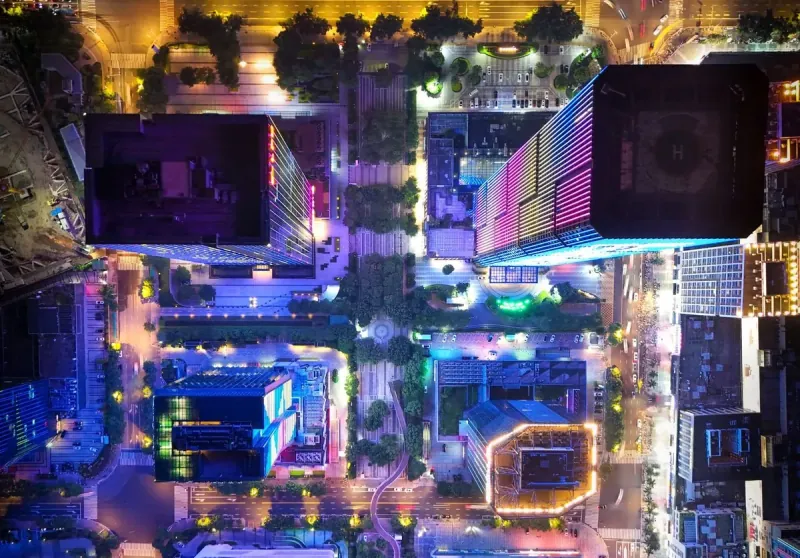
Widespread Adoption Of Technologies That Reduce The Urban Heat Island Effect
b81be9452e84963b · Resolution source: dergipark.org.tr · Policy and Planning to Reduce Urban Heat Island EffectWidespread Adoption Of Technologies That Reduce The Urban Heat Island Effect
Widespread Adoption Of Technologies That Reduce The Urban Heat Island Effect Probability: 80%. Confidence Level: Medium.
City Heat Island Effect Mitigation Technologies - Why They Are Critical?
Cities are becoming the most visible and painful face of global warming. Asphalt, concrete, and glass surfaces absorb solar energy, emitting it back at night, which makes city centers an average of 3 to 5 degrees warmer than surrounding rural areas. This phenomenon is known as the urban heat island effect, and with the increasing frequency and intensity of hot airwaves, it’s becoming a serious public health threat. In this context, the widespread adoption of passive cooling technologies like green roofs, reflective coatings, and smart shading devices in at least 30 percent of major cities by 2033 is emerging as one of the most critical milestones in climate adaptation.
Where Do These Technologies Stand Currently?
The adoption rate of these technologies varies greatly from city to city. Pioneering municipalities in North America and Western Europe have implemented mandatory green roof requirements for new commercial buildings or offered tax incentives to encourage reflective coating usage. For example, programs initiated in Los Angeles using white roofing membranes have measurably reduced surface temperatures. However, on a global scale, these applications have yet to move beyond niche projects. In rapidly urbanizing South Asia, the Middle East, and burgeoning African metropolises, widespread adoption of advanced cooling technologies appears distant given rapid urbanization and cost pressures, where even traditional insulation methods haven’t become commonplace.
What Factors Strengthen This Projection?
The key driver strengthening the likelihood of this projection is the downward trend in costs and increasing regulatory pressure. Extreme heat waves linked to climate change are forcing municipalities into emergency action plans. The European Union's Energy Performance Directive and green building certification systems in some Asian countries are accelerating the spread of these technologies. Furthermore, the cost of reflective coatings has fallen by approximately 40 percent over the last decade, while maintenance costs for green roof systems have been optimized. These economic and legal incentives push the probability of these applications becoming standard in at least 30 percent of major cities by 2033 to around 80 percent.
Which Technologies Are Emerging?
- Green Roofs: Vegetated roofs provide insulation and absorb rainwater, alleviating urban drainage.
- Reflective Coatings: White or pigment-based paints that reflect sunlight can reduce surface temperatures by 10-15 degrees.
- Smart Shading Devices: Automatically opening and closing panels based on solar angles provide shade for buildings and public spaces.
These technologies share the common feature of providing passive cooling without increasing energy consumption. Particularly in cities within hot climate zones, these methods reduce electricity demand, lowering carbon emissions and balancing energy costs.
Frequently Asked Questions
Are Green Roofs Applicable To Every Building?
Green roofs are not suitable for every building due to technical requirements such as roof load and waterproofing. However, they are applicable to new constructions and reinforced existing structures. They are particularly ideal for flat-roofed commercial and public buildings.
Do Reflective Coatings Really Reduce Temperatures?
Yes, white or reflective coatings can reduce rooftop surface temperatures by 10-15 degrees. This translates to a reduction in indoor temperatures of 2-4 degrees, reducing the need for air conditioning. Applications in Los Angeles have validated this effect.
When Do These Technologies Pay Off?
Reflective coatings typically pay back their investment within 2-3 years due to energy savings. Green roofs have higher initial installation costs but provide a return on investment of 5-10 years through energy savings, stormwater management, and extended roof lifespan - incentives that can shorten this timeframe. Municipal incentives can further accelerate these returns.
Related Predictions
- Widespread Adoption Of Climate-resilient Agricultural Systems 2033 · Climate
- Solar And Wind Combined Will Supply More Than 40% Of Global Electricity Generation. 2034 · Climate
- Global Installed Battery Energy Storage Capacity Will Exceed 600 Gigawatts By The End Of 2031. 2031 · Climate
- Renewable Energy Meets 80% Of Global Electricity. 2030 · Climate
- Global Carbon Emissions Fall To 50% Of 2010 Levels. 2030 · Climate